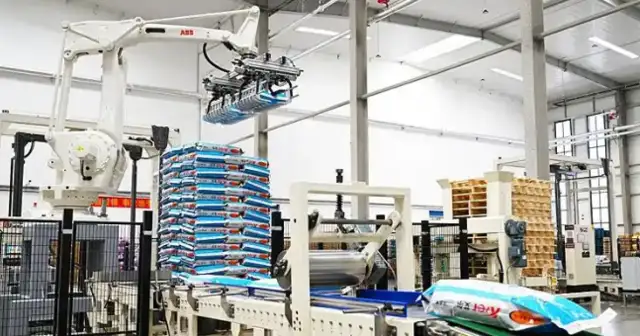
An electrician's warehouse can be up to 30,000 units a day, and an intelligent production line completes quality tests every eight seconds... I don't know. In recent years, the South and Districts of Xing Tai Tai have launched an integrated upgrading of the pet industry + e-commerce, with new models of online electric powerer marketing, and underline product quality closures.
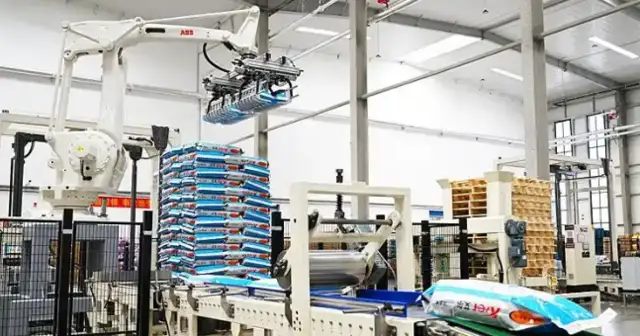
The live feed is going into a warehouse, and frozen dry food is being sold around the world, and the “home of Chinese pet food” is rejuvenating.
“Pet industry + e-commerce”, over 70% online sales
Ten vacuum cold dry silos are operational and fresh chicken chests are being physically dehydrated in an environment of less than 40 degrees Celsius in the warehouse.
The Winnipeg Pet Foods Ltd. production workshop, where several staff members are in the middle control room, monitors real-time operational data for the delivery, shredding, expansion, etc.
Offline production is busy, offline sales is busy.
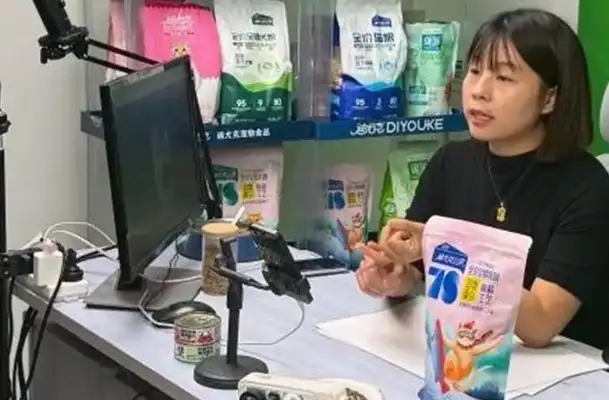
"Our home is an old brand of national goods, and our products cover over 20,000 lower-line stores, and they're free to eat in the live booth today..." In a live booth at Wah Xing Pet Foods, the anchor is introducing the company's pet food products to the camera.
In a warehouse in the village of the town of Jazzon, villagers Ma Lihui were clicking on the mouse in front of the computer. The back-office system showed that the Malihui-run Internet store had just received an order for cat food from Shanxi.
“South Africa is the country's largest producer of pet food. In the first half of this year, 3.47 million tons of pet foods were sold throughout the region, with a sales volume of $2.43 billion, of which 263,000 tons were sold online, or about 75 per cent of the total sales.” Zheng Ruelong, Director of the Department of Agriculture and Rural Affairs of the South Region, said.
In the 1990s, the animal feed industry was developed, thanks to the unique agricultural resources of Nande and Suso. At the beginning of the century, as the pet industry emerged, the livestock feed industry in South China began its transformation into the pet food industry.
“There are 938 owners of the pet industry throughout the region, of which 725 are retailers.” In recent years, Zheng Ruilong has launched an intensive “Pet Industry + E-Commerce” integration and upgrading campaign, which has led to the selection of a national digital village pilot and a national “Internet +” agricultural product for the city-to-city pilot, which has turned into a “Pet Cafeteria”.
The shipping area on the side of the Waheing Company ' s plant is occupied by transport vehicles from different courier companies outside five exits. A delivery package was transported from the warehouse to the port of departure and placed in the express transport vehicle in full code.
“Our storage capacity amounts to 30,000 tons, with more than 100 commodities. Consumers issue orders by 5 p.m., usually on the same day.” Zoe Rico, head of the market department of Wah Xing Company, said that at present, the number of sunrises in the company ' s electrical stores was over 30,000.
The Wahing production base covers 227 acres and has the highest single-body capacity in the country. While focusing on sub-line distribution channels, the leading firm in the Southern and Petty Food Cluster is also actively expanding the electrician channel.
The pace of the development of the electrician is even greater, with 3,000 tons of frozen dry plants producing 3,000 tons of annual capacity coming out of service in 2023 and almost all products being sold online.
“Generally between 6 and 9 a.m., between 11 p.m. and 2 p.m. and after 6 p.m., we are at the peak of daily customer consultations and orders, which are related to the time of travel for consumers.” The director-in-chief of the firm, Yang, said that the products produced and sold by the company were high-end pet foods, that clients were predominantly young consumers, and that “many of the clients were on a list when they were on the subway or after lunch.
In response to the customer characteristics, Sire adjusted the details of the electrician live broadcasting and marketing.
“In these two years, domestic frozen dry products were characterized by the foodization of their staples, the market share grew rapidly and sales were dominated by online channels. Our online marketing strategy helps companies quickly open up the market.” According to Yang, the company ' s products are also exported to markets in South-East Asia, Europe and the United States, through cross-border electrical platforms such as the Ali International Station, with sales accounting for about 30 per cent of the company as a whole.
On 8 August, at the R & D Control Centre of the Southern and District Hua Xing Petty Food Company Ltd. in Xin Tai City, the goods controller was conducting product quality testing using an ultra-efficient liquid chromatograph.
“The dog food source is a wholesale price. I'm in our warehouse right now, and you'll be able to arrange the shipment right away." On 9 August, at 0900 hours, a lighting light and cell phone stand was installed in a warehouse of Yanan (Hebei) Supply Chain Limited, where the anchor began to “shear”.
“We move the live booth to the warehouse, not only to remove the consumer's `virtual sense' of shopping online, but also to standardize and make the supply chain more efficient.” Young Jie, chief of the Yanan supply chain, said.
Since last year, the regional electrician “front shop back silo” model has emerged in South and fast.
“A few days ago, over 5,000 items were sold in over an hour through our live studio by a cooperative company, over $300,000.” According to Yang, the Yanan supply chain, in collaboration with eight local enterprises, integrated 48 live electrician accounts covering many platforms, such as shivering, fast hands, poaching and poaching.
Some orders had already accumulated on that date. The staff member printed the corresponding flyer and finished packing the product in the warehouse. The parcels were then delivered in batches to the conveyor belt area on the side of the warehouse for delivery out of the warehouse.
“This is the operating end of our intelligent warehousing system, which accurately achieves weighing, code entry, smart sorting, and automatically stores the photo records of the product when it comes out.” According to Yang, warehousing logistics is the dominant link in the Yanan supply chain, with many courier companies, such as Sunfung, Post, Polar Rabbit, and others, located within 1 km of the warehouse. Within one hour of the payment of the consumer order, the Yanan supply chain will be ready for quick delivery and allocation.
“Not only can `the day reach', but storage logistics costs have also been reduced from 15 per cent to 8 per cent of sales, which is facilitated by logistics parks.” According to Shao Jie Yang.
The logistics estate in Yang Shao Jie, referred to as the Hebei Yunwo Wisdom Logistics (Zhentai) Industrial Park, where warehouses in the Yannan supply chain are located. Prior to the construction of the industrial park, due to the high cost of feeder logistics, South and pet food and electricity companies generally sent goods to the main line logistics centre in Shanxi and Taiwon.
We built a modern logistics base in south-central China and accelerated the construction of Hebeiyun. A number of commercial and trade logistics projects, such as the WikiLeaks Industrial Park and the IronLeaves Logistics Port, promote deeper integration of industrial chains and help local firms achieve downside efficiency gains.
The “front shop back silo” model is well developed, with a further 350 million yuan invested in the Yanan supply chain, the new gardening project, the main high-end pet food, and the planned start-up of production by the end of May 2026.
“In preparation for the new project, we have moved all the electric operators back to South China this year.” Young Jie said.
The Yanan supply chain began with the processing of traditional electricians and, in recent years, the company has been upgraded to embrace the electrician ' s airwaves, initially by placing its operations centre in Hangzhou.
“The main reason for going out was to set up a new model for the electrician to develop a link.” The big labels, such as “no pack-back freight” , came to the live area of the warehouse and were placed in the background behind the anchor. According to Young Jie, these minor details reflect the experience of the Yanan supply chain in the field of live telecoms.
In recent years, the rapid development of live broadcasting has changed the traditional pattern of electric operators. In order to seize new opportunities in the market, the phenomenon of “go-out” has also emerged in some of the treasure-seeking villages.
“Our warehouses and Skycats and Treasure Netshops are still operating in the village, and the shivering booths are operating in the city of Chang Tai Tai.” Malihui, a “model house for electricians” in the village, has been operating as an electrician for more than 10 years. "We went out from the village to better recruit the anchor," he said.
Focusing on the development of new needs of local electric operators, South and South are accelerating the construction of a live base for pet electricians, building a new professional media training platform and organizing a number of training sessions for electricians to start up their businesses. “Strategies such as pet estates, building creations, electrician buildings, etc. have been set up in the region to better nurture the `petty industry + e-commerce' integration upgrade.” Zheng Rilong said.
Underline, turn off the mass. Gas
“The link No. 1 to this cat food, which contains more than 29.3 per cent coarse protein and 10.5 per cent coarse fat, has been rigorously tested and bought without fear.” On the morning of 8 August, during the live broadcast booth of Wah Xing, the main broadcaster introduced consumers to the content label on a product overpack.
“Corporates have a well-established quality control process and self-censorship capability, so that when consumers ask questions about the quality of their products, the anchor's response is well founded and bottom-up.” Eurico stated that from the selection of suppliers to the storage of raw materials to the production of products, Waheung had established 139 testing projects involving health indicators, fine-tuning indicators and nutrition indicators.
In the control room of the Wahung production workshop, a large screen shows in real time the results of several nutritional indicators, including moisture, coarse protein, fat and fibre.
“On our automated production line, we have an online near-infrared spectroscopy analyser that is tested every eight seconds and is monitored online in real time.” Liu Fong, Director of Product Control, Wah Xing, explained that, in addition to online monitoring, the goods control staff would take samples every half hour on the production line and return to the R & D Control Centre for special testing.
Wah Xing ' s Research and Development Control Centre, a super-efficient liquid chromatography machine is being used by product controllers to detect a semi-finished product of cat food being produced.
“Aflatoxin B1 is a carcinogen that causes immunosuppression of pets, affects blood function, deformity, neurotoxicity, etc. The pet feed hygiene regulations require a limit of 10 μg/kg for aflatoxin B1 in feed.” Liu Fang says.
On the computer screen, there was a flat red chromatography.
"There are no target peaks on the spectra indicating that aflatoxin B1 was not detected in the sample." Liu Fong picks up a bag of cat food products, pointing to the last line of packaging, “This product conforms to the pet feed hygiene regulations”, and says, “This sentence, which reassures consumers, is the result of 20 health indicators being tested.
The development of electricians, with their power points not only in the air, but also on the production line, has become a consensus between Southern and pet food companies. By introducing new equipment and technologies, enterprises are working to improve the quality of their products.
They entered the company ' s frozen dry plant, the workshop was clean and clean, and the large metal equipment was glowing.
“Our workshop is cleaner than a static level of 10,000, which is comparable to the production environment of some high-end electronics and pharmaceutical production enterprises.” According to Yang, the company invested 160 million yuan to introduce frozen dry smart production lines, from the selection of raw materials, low-temperature freezing, vacuum drying to product selection, to achieve precise control of the entire process.
“The pre-treatment chain of raw materials, which achieves precision cutting of meat from 5 mm to 15 mm and removes impurities such as bands and blood clots from the chest of chickens; the PLC (programmable logic controller) system, which monitors data on temperature, vacuum, varnish rate, etc. in real time during the drying process, and automatically adjusts through algorithms to reduce the error rate and to retain 98% of the raw nutrients of the food; and the A visual sorting system, which quickly identifies and removes the coloured and poorly shaped products ...”
While supporting technological innovation in enterprises, South South and through enhanced standards to improve the scientific content and quality of the pet food industry. In recent years, institutions such as the South and the Chinese University of Agriculture have worked with local leading enterprises to develop standards for pet-owner food enterprises and groups, which have evolved into industry standards.
“We have developed product standards for pet food raw materials, for pet staple food processing processes, and for the sale of pet foods, which have evolved into standard complexes.” Zheng Rilong stated that currently, seven enterprises in the Southern and Petty Food Industries Cluster have passed ISO 9001 Quality Management System (QMS) certification and ISO22000 Food Safety Quality Management System (SQMS) certification.
Relevant
Sharing quality checks to protect industry for sustainable development
“How is the quality of our food, not how we boast ourselves, that our products have been certified by the CMA (China Measurement Certification) testing and testing agency...” The anchor is presenting the product with several test reports in the live booth of a shivering store under the banner of Hebei Supply Chain Limited. One such report was produced by Hebei Public Inspection and Inspection Services Ltd.
Quality and safety are prerequisites for the sustainable and healthy development of the pet food industry. In order to upgrade the capacity of the pet food industry cluster testing, the South and Districts of Changtai City, while encouraging production enterprises to build their own testing laboratories, have also established the Industrial Cluster Shared Quality Examination Centre at Hebei Public Inspection and Inspection Services Ltd.
“This liquid chromatography-mass spectrometer, which can be used to detect maize acetone, aflatoxin, etc. in pet foods, has a high cost of about $2 million per instrument, so none of the local pet food companies has purchased it separately.” Mr. Wang Weiwei, Director of Accountancy Tests, described the facilities available in the company ' s laboratory at 47 facilities, including large detection equipment such as gas chromatography-mass spectrometers, liquid chromatographs and atomic absorption spectrometers. In addition, the laboratory has a specialized testing team of 15 technicians.
It now has 96 forage parameters, covering more than 85 per cent of the feed detection projects in national standards. In April of this year, the Public Accountancy and Detection Centre for the Quality of Vegetable Feeding Products in Hebei Province was approved.
“We can detect not only projects in which enterprises are not capable of testing, but also, often, enterprises that are involved in the development of new products, jointly compare their capabilities with those of routine testing.” According to Wang Wei Wei, accounting tests have established partnerships with 80 per cent of local pet food companies.
“Providing technological progress and quality improvement in the pet food industry through the construction of shared quality screening centres providing full-cycle testing services for pet food raw materials and finished products.” Zheng Ruelong, Director-General of the South and Region Agricultural Rural Department, said that, in addition to the establishment of shared quality screening centres, the Chief Quality Officer system was being promoted in South Africa and across the board. There are now 154 pet-related enterprises with chief quality officers and 366 district-wide chief quality officers.
“We will intensify actions to upgrade the quality of the pet food industry cluster and focus on improving quality control systems in order to avoid industrial development problems such as weak capacity for innovative development and low-end intra-portal competition.” Zheng Ruilong said.