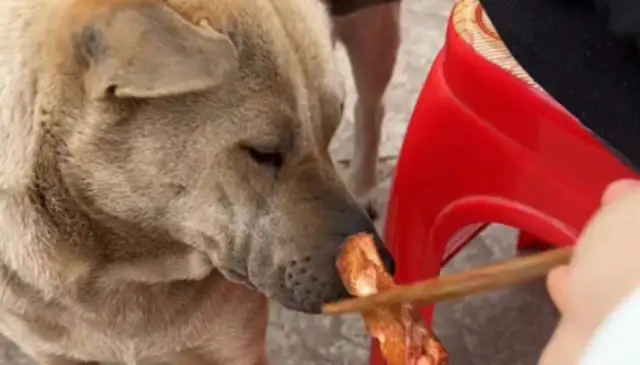
A few days ago, Mr. Chen, a citizen of Wenzhou, called for help from a reporter who took his children to dinner in a restaurant and found a man at the next table eating with a dog and feeding the dog with chopsticks.
"I don't want to pay, but I want to know if the restaurant will let the pet in or not? Is it illegal to feed a dog with a male chopstick?" Mr. Chen said that he hoped that the authorities would clarify the relevant provisions and that the business community would strengthen its management and ensure a safe food environment.
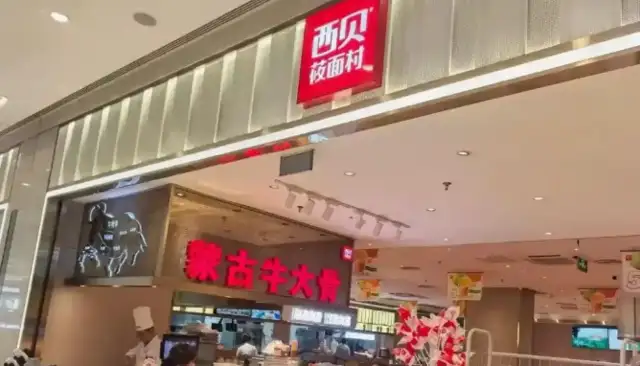
In the parent-child theme restaurant, the next table feeds the dog with a male chopstick.
Mr. Chen recalled that on the night of 31 August, he had taken his children to a mother-to-child restaurant at a shopping mall in Wenzhou for dinner. In the course of the meal, two women customers entered the restaurant with a pet dog (smaller, hairy, hairy, and Mr. Chen was unable to identify a specific breed), not only putting the dog on the dining chair, waiting for the food to come to the table, but also feeding the dog directly with chopsticks from the restaurant.
“This is the parent-child theme restaurant, where there were many families with children, dogs and children, eating together, and feeding dogs with male chopsticks. I'm particularly concerned about hygiene. Who can guarantee that these chopsticks, which have been fed to dogs, will not be used on my head?" Mr. Chen said that he had immediately approached the director of the restaurant, asking whether he could ensure that the chopsticks involved did not have access to other dishes and why the restaurant allowed pets to enter. However, the shopkeeper stated at the time that “there was no policy of denying pets” and that no further solution was given.
Following unsuccessful communication, Mr. Chen chose to call the police, and the civilian police arrived shortly to check the restaurant surveillance. Mr. Chen suggested that he wanted to see the surveillance together, which he refused on the grounds of “inconvenient”, but the store promised to keep the surveillance for one month in preparation for follow-up verification. “The civilian police said that they would contact the relevant authorities and asked me for follow-up feedback, but I received no response during the day of 4 September.” According to Mr. Chen, he did not seek compensation (the cost of meals has been properly paid) but wished to clarify whether “the restaurant can allow the pets to enter” “if it is illegal to feed the dogs” and, if there are problems with the business, to deal with them in accordance with the law; if there is no regulation, he would also like clarification from the authorities to avoid a subsequent similar situation.
The restaurant has been negligent.
It has been fully eliminated and strengthened.
In response to Mr. Chen ' s allegations, the journalist contacted the person in charge of the Sibe restaurant. The Officer-in-Charge stated that the restaurant did have a “no pet entry” requirement (except for special dogs such as guide dogs), that on 31 August, because of the high number of guests on Sundays, the restaurant staff had been negligent in their work and had not first discovered that the client had taken the dog into the restaurant until the other guests had responded.
“We took steps immediately after the incident.” The officer-in-charge explained that all used chopsticks, dishes, tablecloths, etc. used by the clients involved had been discarded and had not entered the cleaning process, and that, at the same time, all the dishes and cooks in the dining room, kitchen and kitchen had been completely eliminated during the night, with video recording of the process. In addition, the restaurant has organized round-ups for front-room staff, emphasizing the need for enhanced observation of visitors to the shop and, if a pet is found to be carrying, consultations are held at the first opportunity to direct customers to place the pet outside the shop, and access to tables and utensils is strictly prohibited.
With regard to the `prohibited pet entry' and `prescribed in the mall', the Officer-in-Charge stated that he was “unsure that the marking is complete” and was not aware of the rules governing pet management at the mall level, but that “doors would strictly enforce their own ban on pets and new employees would be trained in food safety and customer management when entering the workforce”.
There is no law prohibiting pets from entering the restaurant.
With regard to the progress made following Mr. Chen ' s call to the police station in charge of the area, journalists have learned that the incident is still in the verification phase and that the staff are working on the situation and will contact Mr. Chen as soon as possible to provide feedback on the results of the verification.
The journalists then contacted the Market Supervisory Authority of the Sea Zone and the staff member concerned indicated that there were no clear laws and regulations prohibiting pets (non-directive dogs, etc.) from entering the restaurant, either at the national or at the municipal level, and that there was therefore no legal basis for holding that the act of “businessers allowing pets to enter” was illegal, while the practice of the customer feeding the dog with chopsticks in the restaurant was personal and did not violate existing food safety regulations and did not involve administrative penalties if no direct harm was caused to other customers.
Counsel: The restaurant should remain highly responsible
The Deputy Secretary-General of the Zhejiang Zhejiang Zhenxiang Law Office, the Managing Director of the Winzhou City Bar Association, is of the opinion that the regulations currently do not explicitly prohibit dogs from entering the mall, but that, under article 1251 of the Civil Code, animals should be brought up in accordance with the laws and regulations, respect social morality and do not hinder the lives of others. A mall restaurant, which is a public place and where a breeder carries a pet dog or even feeds with a restaurant utensils, is an impediment to basic public morals and seriously hampers the normal meals of other consumers. Counsel points out that dogs are susceptible to bacteria or viruses, and that restaurant foods are intended for the exclusive use of consumers, and that the feeding of pet dogs by their breeders may endanger public health and may constitute criminal liability.
Counsel reminds that restaurants, whether in terms of legal responsibility or business reputation, should be highly responsible, be marked and managed only in terms of whether dogs can be carried. If they can be brought in, sanitary isolation measures should be put in place, otherwise there is not only a legal risk, but it also undermines the reputation of the restaurant.