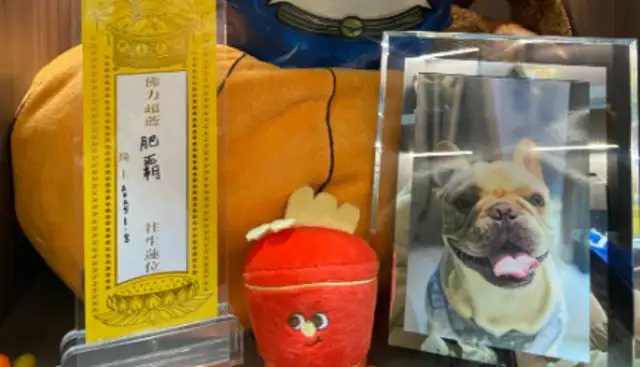
In recent years, with the rise and warming of the pet economy, a growing number of families have seen pets as close family members. What are you going to do after all these years with a pet? This has become a problem for many foster families.
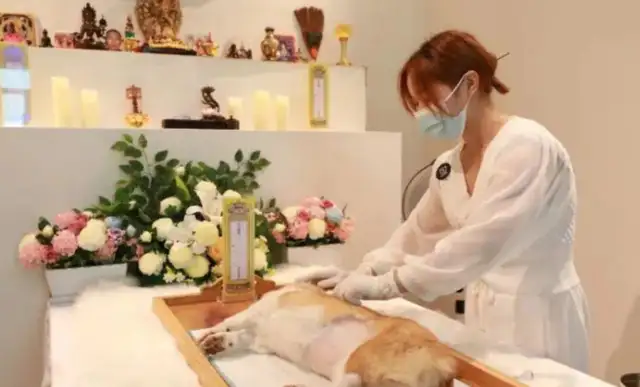
However, behind this emotional demand, the lack of regulation in emerging industries should be of concern. Given the limited official processing capacity, the multiplicity of private door stores, from qualification clearance to environmental prevention, from service processes to fees, and the existence of grey areas in the pet burial industry, who will manage them? How?
Shortly after Mr. Rowe's family died, he thought to contact the pet hospital. Mr. Rowe stated that the handling of the pet remains was relatively simple at the time, that the pet hospital had reported the price, that someone had come to take the pets away and, after processing, had given Mr. Rowe a souvenir made of the ashes, even if Mr. Rowe ' s family had made a formal farewell to the pet that had been with him for almost 10 years.
Mr. Rowe recalled: “We went to a pet hospital, but we didn't know how they handled it, they couldn't see anything, and we ended up sending a small piece of ashes. I thought, "Is this our dog's ashes?"
The life expectancy of pets like cats and dogs is three or five years, and for more than a decade, how to deal with a dead pet becomes a problem for every pet owner. A search by journalists on a group-purchase platform using the key word “pet burial” revealed that there were more than 20 vendors providing related services in Henan Zhengzhou and that prices varied widely, ranging from $200 to $5,000.
Li Peng, head of a pet funeral service centre in Zhengzhou, began working in the pet funeral service in 2023. He told the journalist: “Pups within 20 pounds, the most basic package is $399, and most customers will choose $479. Broad-sized pets like gold hair and Alaska, which take about two or three hours to cremate, are charged around $1,500 in long and costly cases.”
For example, seven projects such as the Chinese-based food package for the 399-dollar ceremony of prayer and farewell service. In addition to cremation services, pet burial businesses offer a number of individualized services.
Journalists searched for keywords such as “pet burial” on a platform and found that there were nearly 50 providers of related services in Tianjin. However, journalists checked their uploads of business qualifications on a case-by-case basis and found that only five or six of them explicitly covered the critical area of “animal harmless disposal”. The vast majority of businesses do not have the necessary legal authorization to engage in cremation, body disposal, etc.
Journalists also looked for complaints from black cats and there were numerous complaints about pet burials. Consumers, for example, complained that the cremation service at a pet funeral shop in Shanghai had been placed on a platform in February of last year and that half-way prices had been raised; that consumer complaints had been made about consumer fraud at a pet cremation company and that the company was unable to provide certificates and qualifications for handling the remains of pets; and that even consumers had reported that after the sudden death of a domestic cat, it had been sent to the pet shop for the disposal of the remains, but that ultimately the merchant had been unable to provide video about the disposal of the bodies, even where they had been processed, without his knowledge.
One practitioner told journalists that he had consulted a number of departments and that receptionists in the civil, market and eco-environmental sectors were unaware of what pet cremation was, let alone regulated. Most of the pet funeral shops that are currently open on the market are general business licences, which operate essentially as “paternity services” or even “technical outreach services” for “sales of daily goods”, but still provide specialized services such as pet cremation and burial.
SONG, Vice-President of the China Business Economic Society, stated to China ' s Voice that the rise of the pet burial industry was both an expression of the progress of social civilization and a necessary product of pet economic development. However, nationwide “unlicensed business” and regulatory gaps in the sector reveal a contradiction between policy lags and market demand.
“The normative nature of the pet burial industry is essentially a balance between public health safety, business ethics and emotional values. It is necessary to explore a model of synergy between the `official processing centres + civil service institutions', along the lines of `pilot-first, taxonomic regulation, and technological empowerment', both to guarantee safety at the bottom line of non-hazardous treatment and to meet the individual needs of citizens to respect life. Only by placing emotional consumption on the path of rule of law can the burial of a pet truly become `the last stop of life', not the `last blow' of trust.”
A pet doctor told journalists that family pet deaths were in both normal and irregular categories. Patients who die as a result of disease may carry a large number of bacteria, viruses or parasites, leaving them at random with risks such as disease transmission and contamination of the environment.
Peng Zheng, Associate Professor at Beijing University Law School, said to journalists that the most prominent problem in the current pet burial industry was the double disorder of “grey business + emotional premium”.
“On the one hand, access thresholds and technical standards are chronically absent, with undocumented operations, poor facilities and irregular operations; it is difficult for consumers to verify whether cremation is carried out alone and whether the remains are real and traceable. On the other hand, prices are highly non-transparent, with high-priced packages and `ceremonial ceremonies' being marketed by merchants through the fragile moods of spoiled scenes, creating a significant emotional premium; and embroiling practices such as random burials by individual agencies, simple burnings, which pose environmental and public health risks, with frequent consumer disputes.
It is understood that there are currently no laws or regulations specific to pet burials. The laws and regulations relating to the burial and cremation of animals are mainly the Animal Disease Prevention Act of the People ' s Republic of China, and the related activities should be carried out at the point where the animal is disposed of in a non-hazardous manner with the relevant authorization. In practice, it is more difficult for enterprises or individuals to set up sites directly for the sound management of animals, under more demanding conditions and with greater prior investment. Traditional non-hazardous disposal sites are generally organized by the local agricultural rural and forestry sectors and are mainly geared towards traditional livestock, which are not easy to meet the demands of families for pet burials in the new era.
Peng Jing believes that it is now necessary to include pet burial in the rule of law regime. “First, with regard to access to pre-qualification, the Law of the People's Republic of China on Animal Disease Control establishes the threshold under which the remains of pets must be disposed of in a non-hazardous manner and places access and authorization on a pre-conditional basis: an enterprise must possess an animal vaccination certificate, complete an environmental evaluation and obtain an “animal harmless treatment permit” issued by the agricultural and rural sector. The design is intended to put high standards at the crossroads of public health and environmental safety and push industry towards standardization and specialization. However, there is a significant gap in real-life operations: difficulties in obtaining permits prevent most agencies from directly certifying.”
At the beginning of this year, Liu Jie, a member of the Tianjin municipal council, recommended that the local authorities for animal disease prevention, together with development reform and planning resources, strengthen the scientific planning of harmless treatment sites, establish a government-led, business-operated system for the disposal of harmless chemicals, improve the system for the recycling of pets, actively build community-business cooperation models, and act as social service points for the collection of pets.
SONG recommended that industry regulation be based on legislation, standards, tools, technology and co-governance, and that it be ensured that regulatory gaps and emotional needs are gradually addressed through “pilot first, classification regulation, public participation”.
“Proposals to provide a replicable sample of governance throughout the country through the establishment of `innovation pilot zones', exploring policies such as mobile crematoria and subsidies for green burial technologies. In the end, pet burials change from a `grey zone' to a `dependency station for life'.