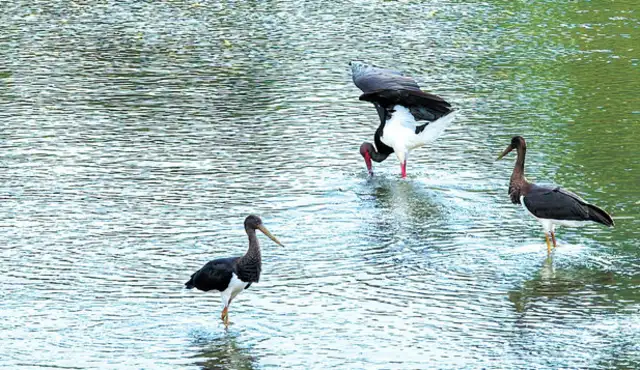
A day ago, seven black thaws came to the Kibak river basin in the city of Accentu, Mongolia. They either look for food in silent waves, or stretch out on the shallows of their wings, moving with the clear waters.
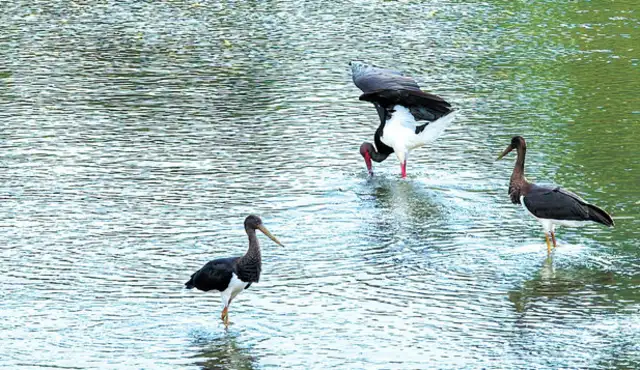
Black storks standing in the river.
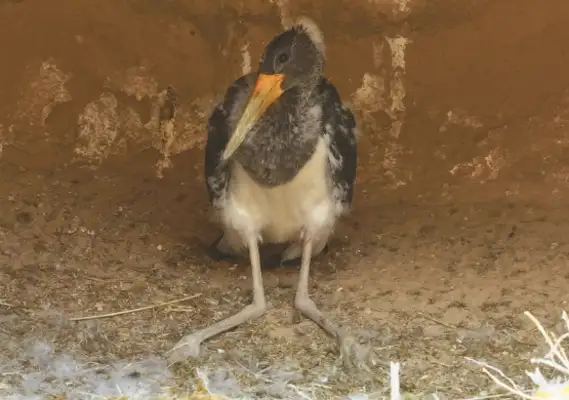
Black beryllium is a state-level wildlife protection with high ecological conservation values. The adult black beryllium is about 95 to 100 cm long, its neck and back are black and brown, its feathers are metallicly green and purple, its abdomen are white as snow, and its fresh red and fine legs are particularly visible in the water. The young bird is tanned, has brown spots on his neck and on his chest, has brown ash or orange red on his lips and feet, and needs to be replaced with a bird's gorgeous coat in the form of a growing variant.
Black beryllium is highly selective in habitat environments, with only wetland environments with clear water quality, abundant rivers, lakes and marshes. When searching for food, they are often well-painted in the water or on the beach, and then, by targeting prey such as fish, amphibians or insects with extraordinary vision, they find the beak in the water with precision, speed and grace.
The Siber River is a tributary of the Western Liao River, which breeds the unique wetland ecology of open waters and dense shallow beaches as it flows through the Kalange flag. In recent years, the Kalange flag has continued to deepen ecological governance in the Siber River basin, with a significant increase in the ecological carrying of the basin through systematic initiatives such as river dredging, water purification and restoration of coastal vegetation, and the construction of natural shelters for wildlife, such as black otters.
To safeguard these “eco-governors”, the Kalange flag constructs a normal protection mechanism led by the forest grass sector, coordinated by civil environmental organizations and involving volunteers. The rangers carry out regular patrols along the basins, rigorously screen illegal fishing, habitat destruction, etc., and simultaneously activate infrared cameras to record black storks. The protection of black beryllium has been continuously disseminated to the population through village outreach and ecological classes.