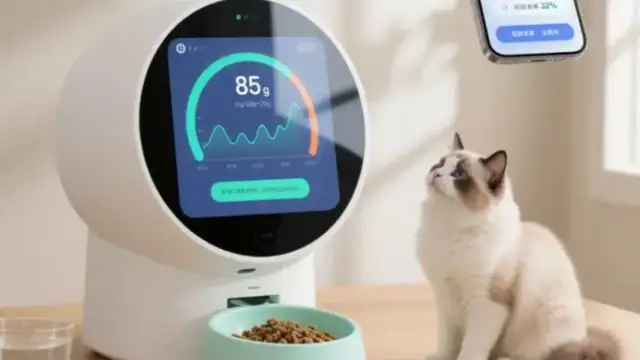
When the “sweet child” becomes an important member of the family, the demand for rearing is no longer limited to “sweeting and warm”, but is being upgraded in a more scientific and sophisticated direction. Today, the pet industry is ushering in an AI technology-driven change, with "smart pets" moving into ordinary people's homes, while pet health management is the central focus of this change.
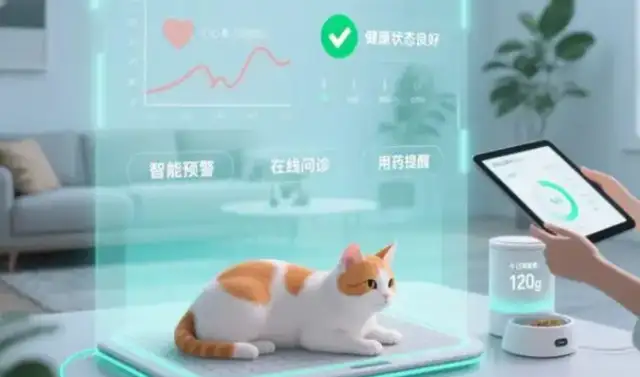
In the past, pet owners, who wanted to understand the health status of their pets, often relied on regular medical examinations or on their access to medical care in the event of manifest discomfort, and could easily miss early health warnings.
However, with the deep integration of AI technology with pet supplies and services, the situation is being broken. Now, just one smart pet feeder can record the daily consumption, frequency of consumption of pets through AI algorithms, and in case of anomalous data from “eating” or “drinking hot” the device immediately sends a reminder to the pet's master phone; a smart cat's sandbas can automatically measure the number of pets excreted, the form of faeces, and even make a preliminary assessment of whether there is a gastrointestinal problem, so that the “taste officer” can read the pet's health signals from his daily care.
And even more surprising is the upgrade of the AI pet health monitoring equipment. The smart collars that appear on the market not only locate pets in real time, but also carry heart rate, body temperature sensors and monitor pet physiological indicators 24 hours.
In the event of an abnormal heart rate or temperature fluctuations for pets, the collar triggers the alarm at the first moment, while connecting the emergency route to the nearby pet hospital to buy valuable time for their treatment.
Some brands have also introduced AI visual diagnostics, and after pet owners upload skin and hair photographs of pets, the AI system is able to quickly identify the existence of skin diseases, parasitic infections, etc., in conjunction with big data, and give preliminary care advice, significantly reducing the risk of “small disease to large disease”.
In addition to hardware equipment, AI applications at the end of pet medical services are accelerating landing. A number of chained pet hospitals have introduced the AI Auxiliary Diagnostic System, which allows rapid matching of similar cases by inputting information on the symptoms of the pet, his medical history, etc., and provides doctors with diagnostic references and improved the effectiveness of the treatment; and the online pet health platform, which has introduced AI Clinical Services, which allows the pet owner to consult on basic health issues, addresses the pain of “no hospital in the middle of the night emergency” and “no hospital”.
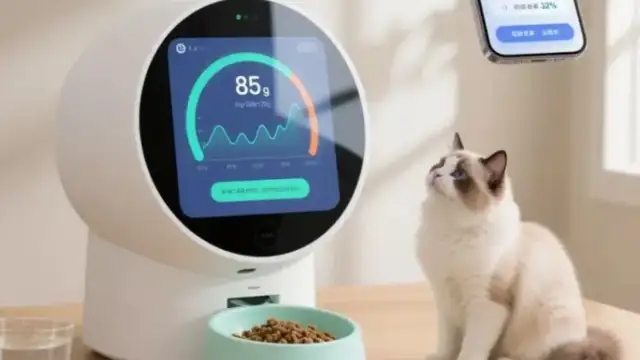
This AI driven pet change is essentially a deep response to the need for pet health. As Z became a patron force for generations, they were more willing to pay for smart products that could improve the quality of life of pets and ensure their health.
The data show that in the first half of 2025, the sales of the country ' s AI pets increased by 80 per cent each year, with the health surveillance category accounting for 65 per cent of the products, reflecting the market ' s emphasis on pet health management.
In the future, as AI technology matures further, pet health management may achieve the ultimate goal of “prevent more than cure” - to build an exclusive pet health archive through long-term data monitoring. AI systems predict potential disease risks in advance and truly “early detection, early intervention”.
For the pet industry, capturing the "AI + Health" wind is both a necessary choice to respond to consumption demand and a key driver of the industry's transition from a "black" to a "screech" one. After all, for every pet owner, the health of a hairy child is the core of happiness in a caring life.