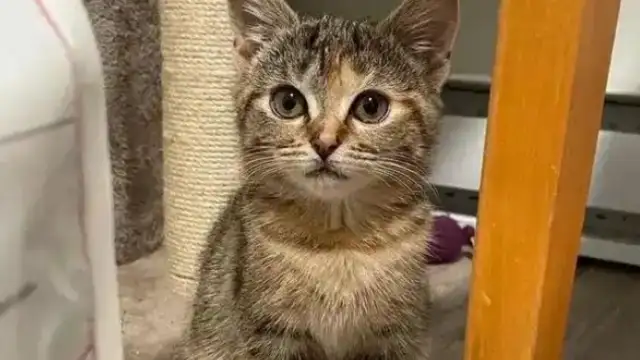
The country's first case of cat abuse: the law finally backed up the baby.
When a man brutally killed more than 20 innocent cats, he might not have thought he would be the “first” in Chinese legal history. This is not an honourable record, but the first criminal case of animal abuse in the country. Behind this "first instance" is a reflection of the change in the perception of animal protection in our society and the improvement of the legal system.
But is this breakthrough too late? And how do we see the underlying significance of this case?
A historic step: from moral condemnation to legal sanctions
To be honest, when I saw the words “for the first time in the country”, it was complicated.
On the one hand, I am pleased with the progress of the law. Finally, those innocent small lives were protected by law and those brutal acts were no longer confined to moral condemnation.
On the other hand, I regret that this “first instance” came too late. Before that, how many innocent animals died in pain without the protection of the law?
More than 20 cats, each once alive. They may have slept in the sun, may have trusted human beings, but eventually died in the hands of a pervert. This suffering should never happen again to any animal.
The significance of this case goes far beyond the case itself. It marks the beginning of our legal system to face up to the rights of animals and to protect those who cannot speak for themselves with criminal law, the most severe weapon.
Filling the legal gap: animal protection is no longer an “extralegal place”
Animal protection has long been relatively weak in our legal system.
In previous cases of animal abuse, we have often been able to impose administrative penalties only through the Policing Administration Punishment Act, with detention for up to a few days and a fine. Such punishment is clearly insufficient in cases of aggravating circumstances and cruelty.
I remember seeing a lot of animal abuse videos coming out of the web, and the netizens were angry and condemned the perpetrators. But apart from moral condemnation, we seem to have little to do with them.
It's different now. The establishment of a criminal case in this case means that the abuse of animals may face penalties. This is not only a deterrent to the perpetrators, but also the protection of all animals.
Of course, this breakthrough did not occur in a vacuum. It is based on the continuous improvement of relevant laws and regulations and is the result of a gradual change in social attitudes.
Social change: from "beast" to "life"
This case reflects not only legal advances, but also profound changes in social attitudes.
In the traditional sense, animals are often seen as the property or instruments of human beings, and this is reflected in the terms “cow horses”, “deast animals”. In this sense, the abuse of animals is, at best, a “damage to other people's property”, which is hardly a crime.
But as societies develop, more and more people are beginning to realize that animals are also sensory organisms and that they can feel pain and fear. Abuse of animals is not only a matter of morality, but also of law.
In particular, in the context of urbanization, pets have become important members of many families. It's hard not to think of it as an individual with feelings when you look at your cat in your arms.
This change of attitude provides a social basis for the improvement of animal protection laws. Without a change in public perception, there will be no legal progress.
Psychological thinking: the inner world of animal abusers
While we condemn animal abuse, I would also like to analyse the underlying causes from a psychological perspective.
Many studies have shown that animal abuse is often associated with the psychological problems of the perpetrator. Some may have experienced trauma during childhood, some may have had personality impairments, and others may have sought stimulation and control.
More worryingly, many criminal psychology studies have found that animal abuse is often a precursor to more violent crime. Those who abuse animals today are likely to kill humanity tomorrow.
From this point of view, the severe fight against animal abuse is aimed not only at protecting animals but also at protecting social security.
Of course, while we condemn those acts, we should also reflect on how to prevent such problems at their source. Mental health education, social support systems and early intervention mechanisms are important.

The Challenge of the Cyber Age: Real Pain in Virtual Space
It is worth noting that many animal abuse is now being broadcast on video.
This phenomenon is particularly angry. On the one hand, they are not only abusing animals but also using them as a means of entertainment and even profit. On the other hand, the dissemination of these videos can cause psychological trauma to viewers, especially children and adolescents.
Web platforms have important responsibilities in this regard. They need to establish stricter content clearance mechanisms, remove such harmful elements in a timely manner and work with law enforcement to track uploaders.
At the same time, every one of us on the Internet has a responsibility. Such content should not be viewed and disseminated out of curiosity, but reported in a timely manner.
The importance of education:
Education is essential to truly reduce animal abuse.
We need to nurture children's love and respect for animals from an early age. Let them understand that animals are also sensory lives that deserve our protection and care.
School education, family education and social education should all assume that responsibility. We can cultivate the love of our children in various ways, such as courses on animal protection topics, visits to animal rescue centres, participation in animal protection activities, etc.
At the same time, we need to educate adults. Many abuse animals not because of natural cruelty but because of a lack of knowledge and awareness. It is also important to raise awareness of animal sensory abilities and the dangers of animal abuse through education.
Improvement of the aid system: more than punishment
While combating animal abuse, we also need to improve the animal rescue system.
Many cities now have stray animals, and if this problem is not properly addressed, it may “facilitate” the abuse of animals. We need to establish more animal shelters, promote science-based animal management and encourage adoption as an alternative to purchase.
At the same time, we need to strengthen our support for animal services. These institutions, which are often underfunded and understaffed, have important social responsibilities. Governments should give more support and society should pay more attention.
The legal detail is perfect: the devil is in the details.
While this case has achieved a breakthrough in criminal proceedings, much remains to be done with regard to legal details.
For example, how to define “abuse animals”? What constitutes a crime? How can sentencing criteria be determined? These require further clarification.
And, for example, how to deal with forensics? Abuse of animals often occurs in hidden places and evidence is difficult to obtain. How can effective reporting and investigation mechanisms be established?
Also, how to deal with the contradiction between animals as “property” and “life”? How can animal protection and other social interests be balanced?
These issues require joint thinking and solutions by legislators, law enforcers, academics and all sectors of society.
Media responsibility: rational reporting, avoiding incitement
The media also bear the corresponding responsibility for reporting such cases.
On the one hand, the media should report the facts objectively and honestly, inform the public about the circumstances of the case and promote social attention and discussion on animal protection issues.
The media, on the other hand, must avoid over-advertising the details of violence and inciting public sentiment. In particular, specific images of animal abuse are to be avoided, which may cause psychological trauma to the audience and may also provide “textbooks” to potential imitators.
Reasonable and responsible reporting can make a real contribution to solving problems.
Personal action: what everyone can do.
Faced with the big topic of animal protection, one might think that the power of the individual is insignificant. But in fact, everyone can contribute to animal protection.
If you have pets, treat them well and provide them with adequate living conditions and medical care.
If you see animal abuse, stop and report it.
If you are able to do so, consideration may be given to adopting stray animals, or to providing volunteer services or donations to animal rescue agencies.
In everyday life, care must also be taken as to whether or not it is possible to cause harm to animals. For example, do not feed wild animals at will, do not buy wildlife products, etc.
It's written at the end: Let the sun shine on every life.
The first criminal case of cat abuse in the country, though a little late, was significant. It tells us that the law is progressing, that society is progressing and that the lives that cannot speak for themselves are increasingly protected.
But we cannot be content with this “first instance”. We want this case to be a starting point, not an end. We must continue to improve the relevant laws and regulations, continue to strengthen law enforcement and continue to promote social change.
Every life deserves to be respected and every life should be protected. Both humans and animals should live safely in the light of the law.
It's not just for animals, it's for ourselves. It is a truly civilized society that can treat animals well.
Let us work together to make the world more friendly to all lives. Because in protecting animals, we are also protecting the best part of humanity.