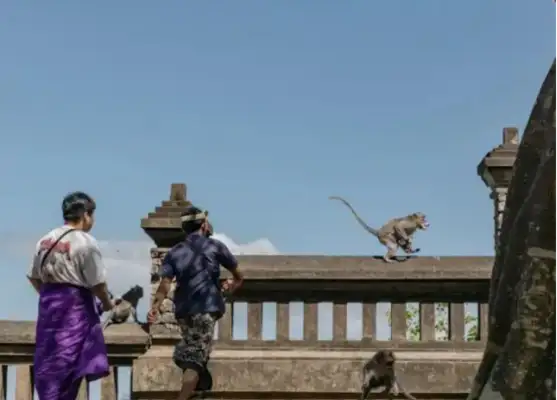
In the well-known site of the Urovatu Temple in Bali, monkey “jacking” tourists became almost daily. The hat, sunglasses, cameras, mobile phones, passports, etc. may be stolen in an instant as long as the tourists are negligent. In the face of recurrent “grabbings”, staff have to come out frequently to help collect goods through “negotiations” and to remind tourists over and over again that “it is important to keep an eye on your things, and the monkeys are around”.
TNI reported that several research teams had studied the monkeys' behaviour and found that their theft was essentially a “barter”, and that monkeys were waiting for staff members to trade for food by stealing from tourists. The more frequent monkeys come into contact with tourists, the more sophisticated the theft technique is. Adult monkeys are better at identifying high-value items, while young monkeys learn to steal and negotiate in imitations.
According to the researcher, “this behaviour is gradually practised and is transmitted from generation to generation among the Urouatu monkeys for at least 30 years”. The looting of the Bali monkeys has had some negative effects. According to the Indonesian Times Weekly (Tempo), over the past five years, several tourists have filed claims for monkey-induced incidents, amounting to more than $17,000. In order to ensure the safety and security of tourists, the Bali authorities recommended that tourists view the local wild monkeys as far as possible and avoid direct contact. Although the monkeys at the Bali site have been regularly vaccinated against rabies, the official recommendation is that tourists ensure that they are vaccinated before travelling.