Designation: PET2496
English name: Homopus boulengeri
Country of origin: Most of the most found species of turtles in the Cape of the Bolange, Karu region, South Africa
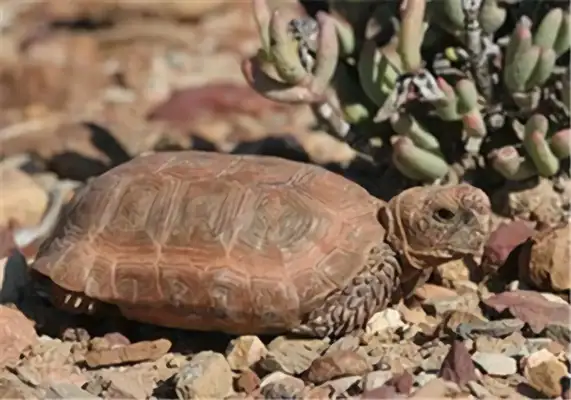
There are not many records of artificial raising of turtles in the Bulang Sea Corner, as this is a species of turtles that is not easily found in the field, and of course there is not much research on it, so conservation work in the Bulang Sea Corner has not yet taken place and the importance of protection is not yet recognized.
Land turtles in the Bolange Corner are terrestrial turtles and rare turtles; initially found in the Karu region of South Africa, the shape of a spotted sea turtle similar to that of the Precious Turtle, is slightly larger and can reach 13 cm. The habitat of the Bulang Cape is confined to rock areas, which are similar to spot turtles, the Burger Cape turtles and part of the Karu turtles.
Chinese name: Borneo.
Latin name: Homopus boulengeri
English name: Boulenges Cape Tortoise, Karroo Padloper Tortoise
Alias: Bulang Parrot Tortoise
Biology classification: animal communities, reptiles, turtles, turtles, turtles, turtles, turtles, turtles on the corner of the Borange Sea
manner of reproduction: ovarians (mother tortoises produce only one egg)
Body size (b]l: 13 cm
Endangered state: CITES
Distribution: Most notably found in the Karu region of South Africa, from the east of Perston and Wolwefontein to the west of Sutherland and Carnarvon. Characteristics of turtle morphology in Bolange.
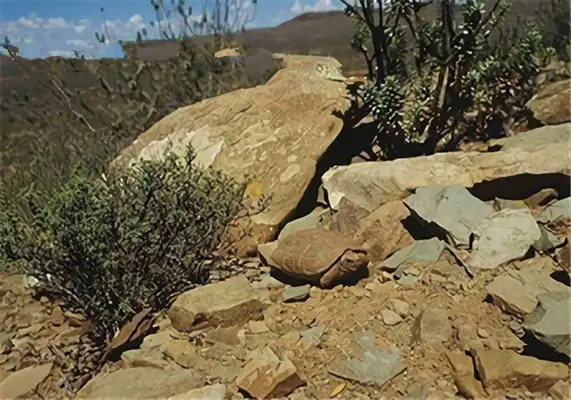
The Bolange Cape turtles are a valuable species of turtles on the mainland of South Africa, and the wild environment is not uncommon, so few are seen on the market. And the look of the turtles on the corner of Bolange is not very attractive, so it is not popular.
In the case of turtles with a uniform back-to-back colour, which is seen as too monolithic and not very popular, colour changes ranging from yellow, brown to microred, small head, and colours consistent with body, sharp state, back-to-back colours complement those of the environment, creating a good protective colour. Male bras are dented, and female and female ass are stabbing. The shape is similar to that of a rare turtle, but slightly larger, up to 13 centimetres, with a completely different pattern.
Bulanger is a ground turtle who can put all his body under the shell, but not like a closed-hull turtle, but who can make a good disguise for himself, and who doesn't look closely at them looks like a rock that doesn't have any chrysanthemum, which happens to live in a rocky natural state.
The vermin of the turtles on the corner of Borange is not obvious. And the colour does not distinguish significantly from the color of the backnail, which is a very monotonous tortoise with an elliptical shape. The knowledge of nursing turtles in Bolange.
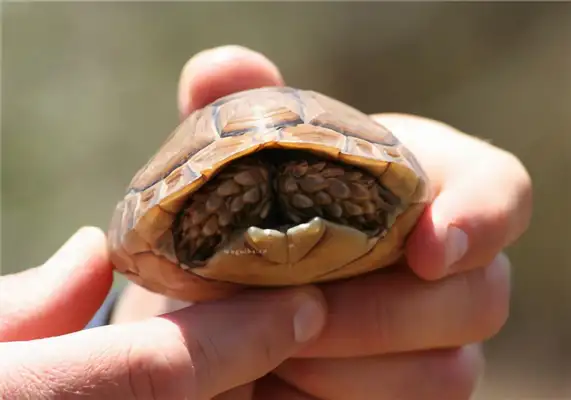
There is little research into the wild Bolange Cape turtles, which only appear in South Africa and are scarcely available. The harsh environment in which the Bolange Capes live in a rocky zone and treat them as their own reserves is also an indication of the vitality of the Bolange Corners.
First, we begin with the everyday care of turtles. In general, land turtles are predominantly plant-based and largely vegetarian. However, different species of turtles have different foods, and when we learn about the specific foods of different turtles, we equip them with the food they need. The main areas are fruit, vegetables, grass, etc.
2. In terms of humidity, if land turtles are to be raised in areas of chronic hot weather, water basins must be placed. Some species from deserts and steppes, such as the Four-clawed Turtle and the Cofa Tortoise, cannot bear higher humidity. That is to say, if you were raising land turtles in a long wet climate, it would be inappropriate to feed them unless you can set them up in a wet-regulated breeding environment. In some coastal areas, higher air humidity makes it more appropriate to raise some turtle species living on the margins of tropical moist grasslands or forests.
3. For most of the year, turtles are required to be out in the open. The UVB in the sun is important for the growth of the turtles, so it is important to have UVB lamps when it does not meet the sunbath.
We do not have the means to determine the specific means of protection for turtles on the Polange Point, but the specific methods of conservation can be inferred from the conservation of most of the turtles, and these are only a recommendation for turtle friends. The living environment of the turtles of the Bolange.
The culture environment is as simple as possible to facilitate management. In closed breeding environments, where larvae neurological urgency is easy and dust interference and continuous exposure to strong light can lead to individual discomfort, it is best for the feeder to choose a semi-open breeding environment with a suitable temperature hideout, which can be covered with cut grass. Temperature in the environment is about 26-30°C, with early and late temperature differentials not too high, and larvae are not very resilient to temperature. If the temperature of the hideout is stable enough, the ambient temperature will not be too deliberately sought for stability, just as long as it is guaranteed to provide an additional point of about 35°C. The point of the turtle breeding in Borange.
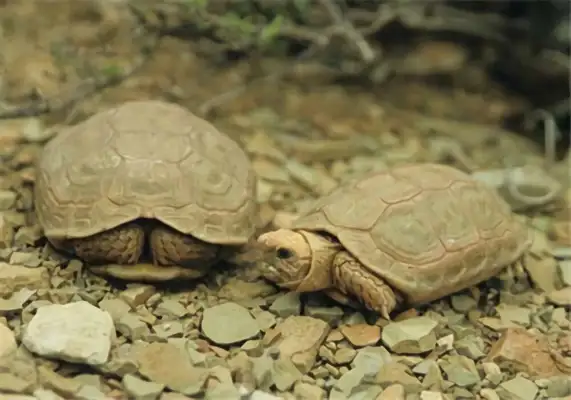
Land turtles, which live mainly in the South African savannahs, have a single-coloured land turtle that also has a single choice of food, and they are often exclusive vegetarians, but are abundant in the choice of herb species, that is to say, they eat a variety of grasses.
High-fibre vegetables are numerous and generally available to turtles with a higher sense of vegetables, such as kale, cabbage, mustard... Fibres are of two kinds, one of thick visible fibres, such as hollow cabbage. The other is the so-called diet fibre, which is cellulose. Generally, cellulose content is high in vegetables, even in some fruits. But the fibers are different, and can be judged by the naked eye and the touch of the hand, so let's briefly describe the different effects of the fibres and cellulose. Fibres, on the one hand, constitute the main substance of the faeces structure, remembering the kind of one-on-one defecation of field turtles, so this is the case for promoting high-fibrous pasture for herbivores.
The other effect of fibre is ingestion of the intestinal tract, which is determined by the specific intestinal herbs of the terrestrial turtle, where specific intestinal strains, such as cattle and horses, are found, and not humans. The decomposition of fibres produces sugar, which is similar to the way people eat starch, so the provision of fibres is in fact a nutrient. However, cellulose functions and fibres are very different, as cellulose is the substance that causes intestinal creeping, and the lack of cellulose intake leads to constipation, with higher cellulose components in the apples that are scavenging, in addition to deep green leaves.
In addition to vegetables, some pastures can also be selected, such as high protein-rich herbs and high calcium soybean pastures, bearing in mind that food choices must be diversified.