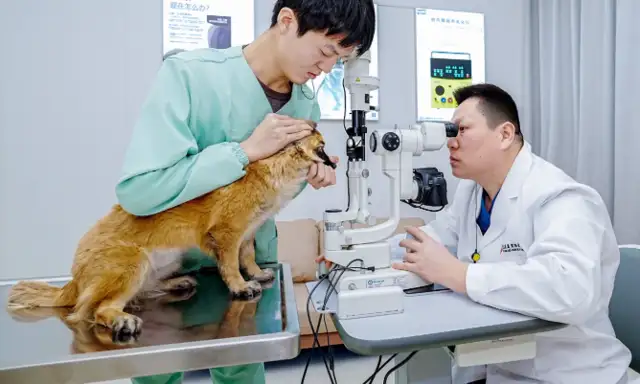
In recent days, the Academy of Animal Science and Technology of the Chinese University of Agriculture has introduced the new national first “Pet” undergraduate course, which has attracted widespread attention.
It was described as a broad category of “animal sciences”, with a specialization in “animal sciences (partner animals)” and a professional code 090301, with a four-year graduate degree in “Agriculture”. For the first time, 50 people were enrolled. In my view, it would be appropriate to use the “petty” profession as a proxy for promoting a new profession in a language that the public could understand.
There is no doubt that the emergence of the pet profession is related to the rapidly growing industry of recent years. In 2024, the size of China ' s pet consumption market exceeded 300 billion yuan, with a compound growth rate of 11.9 per cent over the past decade. This means that pets have become a puzzle that cannot be ignored in the contemporary social landscape, and that the pet industry and the pet economy are flourishing.
On 8 May this year, the Ministry of Human Resources and Social Security announced 42 new jobs, of which the service dog trainer was officially introduced as new jobs under the pet trainer.
The introduction of “animal sciences (partner animals)” in universities is also a positive interaction with the market. Sensitivity to capture changes in markets is not bound by traditional perceptions, and this approach deserves recognition. In any case, it is important to consider how to respond to market demand and ensure that students have a relatively secure career path.
In terms of professional content, the “Pet” profession is not just a cat-and-dog business. It includes partner animal nutrition, partner animal genetics and breeding, partner animal reproduction, feed quality assessment and safety testing, and so forth. This also means that the profession, whether scientific research or employment, produces cross-cutting and complex talent with no promise.