Deliberate selection of cat foods, with exclusive snacks and toys, for their "dressing" and for the design of fine "dressing"... The 25-year-old Hunan girl Li Jia Hye took care of her silver-grained cat like a child. She said, "I physically have cats, I have cats."
According to the 2025 White Paper on the Chinese pet industry, the size of the Chinese pet economy in 2024 exceeded 300 billion yuan (RMB, same as the previous one); according to the Goldman Sachs report of the International Investment Agency, the number of Chinese pets exceeded, for the first time, the number of children under 4 years of age in 2024, and it is expected that by 2030, it will be close to two times that number.
As pet owners' emotional demand for pets increases, the standard of pet water rises, and “valid” pets become a new trend in pet consumption, attracting a number of entrepreneurs to dig for the gold economy.
A lovely hamster “house” was born from She Xiaoqing pen in the town of Dingshan in the city of Luro, Hunan province, and was then transformed into a production workshop run by her husband Chen Yun. When it does, the huts will be sold to North America, countries of South-East Asia and countries and regions such as Korea and Taiwan, China, as “new homes” for pets.
After 85, Mr. and Mrs. Sheh Xiaoqin worked in the design category in Changsha and during the feeding of hamsters, found that the market had fewer options for the hamster perimeter, a “Blue Sea” to be excavated. Two people who smelled business opportunities resigned to start a business and turned into Sweet Sugar's manager.
In Xie Xiaojun's view, the modern concept of human rearing has shifted from “raising” to “bringing” and, therefore, greater consideration should be given to the comfort of pets in product design. “We have set up villas that combine the scenes of sheltering houses, tunnels and so on, freeing them from the traditional form of cage-breeding, based on hamster living habits, which effectively prevent hamster behavioural disorders in narrow spaces.” Xie Xiaoxi said.
The 58-year-old carpenter at Ushi Peak Village in Wushi County was also transformed to eat the “new cake”.
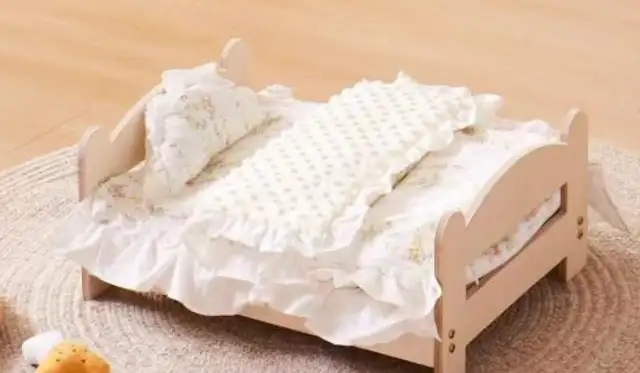
In 2020, Zhou Zhou Zhou Zhou realized that his traditional furniture industry market was shrinking and that pet home products were selling fire. “Despite the slight differences in the way the products are produced, transformation is not difficult.” After careful consideration, the new resolve at the top of the week was transformed by the establishment of the City of Tsumi Furniture Manufacturing Company Ltd.
Analysis of product sales shows that at the end of the week, pet owners tend to take safety first in their selection. For the purpose of strict quality control, the Zhou New Zealand New Zealand has built up a large number of retrogressors using wood-free environmental panels imported from Russia, New Zealand and elsewhere.
At present, the new company at the top of the week has over 100 products such as pet mattresses, bedding, combs and more than 30 Internet shops. In 2024, company sales amounted to over $30 million, with products from countries and regions such as Korea, Japan, the United States and Germany.
In addition to the daily “eating through” of pets, pet health care, pet health insurance, etc. are increasingly receiving the attention of pet owners, driving the pet economy towards a life cycle.
“After economic independence, I began to focus on the long-term health management of pets, such as oral hygiene and weight control.” The graduate student from Hunan University last year, Éssam, introduced herself to the annual medical examination package and health insurance for Blue-Eyed Short Cats, and to learn about pet-related preventive medical care through web platforms.
According to Zhang Yi, a consultant and chief analyst, the optimization of the policy environment, the continuous improvement of the industrial chain, and the dual drive of the single economy and the silver economy, together provide a solid foundation for China ' s pet industry to move forward in a sound manner, but enterprises should focus on controlling the quality of pet products and the personalization needs of pet owners, strengthening innovation capacity and branding to respond to future market changes.