Designation: PET2332
English name: Psittaculios edwardsi
Origin: Australia
Vulnerability: high mortality rate among young birds
Life: An overview of the species of Edward figs, 8-12.
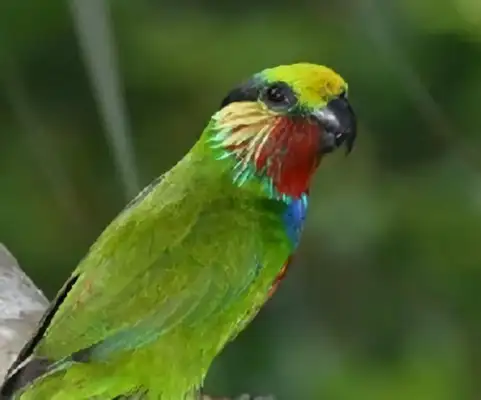
The Eduard fig parrot is a larger macaw, whose sex can be distinguished by appearance, the breast and abdomen of the male are red, the female is blue and the juvenile feather is similar to the female. In low-lying forests, mainly humid, where open forest areas, forest margins and human settlements are found, the range of activities is usually located below 800 m above sea level, with pairs or small groups of people moving together and noisy, sometimes gathering around 400 or so large on fruity trees, moving quickly and often upside down in branches for food, mainly figs, nectar, insects and fruit. It is easy to breed smaller figs of parrots, but one of the same problems is the high mortality rate of young birds, which is likely to die soon after they hatch, or the fact that the pro-birds do not feed the chicks, is ideal for reproduction, is sensitive to the examination of nests, avoid often opening nesting boxes, produce two eggs in one nest, hatch in 19 days, and grow feathers in about two months.
Chinese literary name: Edward Fanta-free parrot
Latin name: Psittaculirostris edwardsi
Don't call it a fig parrot.
Context: Animals
Gate: Pipeline gate
Programme: Birds
Look: Parakeet.
Section: parrots
Family: Faggot parrots
Yes: Nautilus
Named by Oustalet, 1885
English name: Edwards's Fig Parrot
English name: Edwards's Fig-Parrot
Name in English: Scarlet-cheeked Fig Parrot Eduard parrot ' s foreign appearance
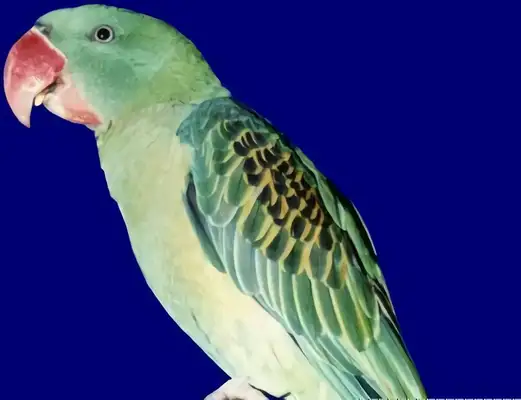
Edward Nuts are larger, 18 cm in size and 105 g weight. The male has a frontal forehead and a crown of yellow green, with olive green or black brown broadband running across his pillow, red cheeks and throats, yellow ear feathers, and thick and long red and blue feathers mixed in his neck, full upper chest blue, red belts in the upper abdominal centre, yellow stripes in his wings. Black ash, red eyes. The females are male-like, but have blue purple abdomen and yellow green upper abdomen. Teenage colours are similar to adult females, but yellow cheeks have red stripes and red brown eyes. Eduard fig parrots are located in Indonesia, northern Papua New Guinea and small parts of Arian Java. Edward Nutless Parrots are lively parrots, but they are nervous and shy at first breeding and sensitive during adaptation, suggesting less unnecessary disturbance and less easily changing the environment.
Eduards do not have large numbers of macaws, and the world total should be over 100,000, which, like other fig parrots, is more difficult to raise and should be fed, in addition to the ration of fruit and vegetables, to powdered feeds used by melon parrots or fruit-orthodox birds; cases of deaths due to unknown causes often occur when they are not properly raised. The point of Edward's fig parrot breeding.
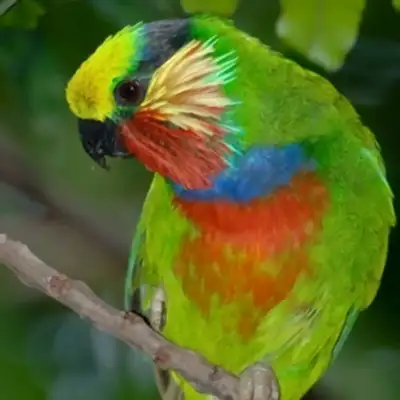
Edward Freckles are lively parrots, but they are nervous and shy when they are raised and sensitive during their adaptation period. It is recommended to reduce unnecessary disturbance and less easily changing the environment. It is less likely to withstand cold weather and temperatures below 22 degrees. It is important not to introduce rearing when temperatures are too poor or cold, with high rates of death and illness. It is important to maintain sanitation and to provide well-nourished and diverse foods. Vitamin K is particularly necessary. Foods such as vegetables, fruits, honey, seeds, cereals, etc., are a good choice, honey parrots use or fruit-eating birds are used to make them much more viable, and to increase the availability of vitamin life would make them healthier, as Edward flowerless parrots are prone to sudden death due to uncertainty, especially wild birds, which is more likely to occur, and take care of more expensive food.
Edward fig parrot breeds smaller fig parrots easily, but one of the same problems is the high mortality rate of young birds, who are likely to die soon after they hatch, or who do not feed the chicks, which is ideal for reproduction, sensitive to the examination of nests, avoiding frequent detours, producing two nests, hatching 19 days later and growing feathers for about two months. Like other figs, it is more difficult to feed, in addition to the ration of vegetables and vegetables, the powdered feed used by the parrots or by fruit-orthodox birds; if not properly fed, there are frequent cases of unspecified deaths. Edward's fig parrot breeding environment
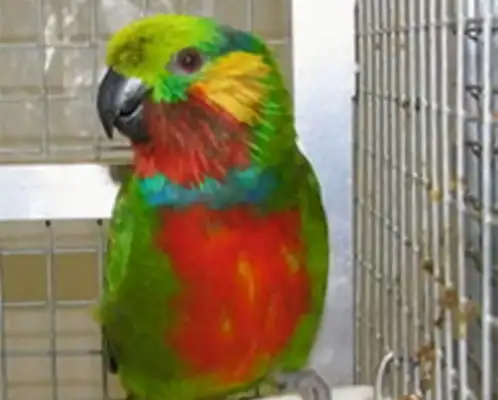
Eduard-free parrots, mainly in wet low-lying forests, also have traces of them in open forest areas, forest margins and human settlements, usually operating in pairs or small groups of areas below 800m above sea level, and noisy, sometimes gathering around 400 large numbers of fruit-fed trees, moving quickly and often upside down in branches for food. A cluster of macaws with regular and non-frozen eyes with reproductive periods of approximately January to May. The Edward fig parrot is mainly located in northern Papua New Guinea and in small parts of Arian Java. The number of cages is small and the total number of cages worldwide should exceed 100,000, and, like other fig parrots, it is more difficult to feed, in addition to the quantity of fruit and vegetables, the powdered feed used by the parrots or by fruit-orthodox birds; and, in cases of inappropriate breeding, deaths often occur for unknown reasons.
Newly raised Edward fig parrots are nervous and shy and sensitive during their adaptation, suggesting less unnecessary disturbance and less easily changing the environment, less able to withstand cold weather, less suitable for temperatures of less than 22 degrees, less likely to introduce rearing when the temperature is too cold or cold, high mortality and morbidity rates, and the importance of maintaining sanitation and providing well-nourished and diverse food. Edward's fig parrot.
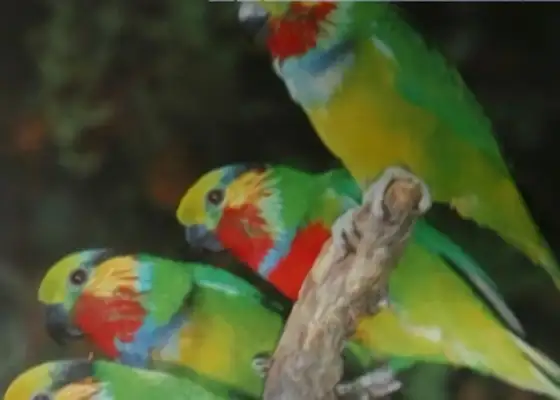
Feeding Eduard fig parrot vitamin K is particularly necessary. Foods such as vegetables, fruits, nectar, seeds, grains, etc., are a good choice and can significantly improve their survival rates, as well as the supply of vitamins, because Edward fig parrots are prone to sudden deaths due to unknown deaths, especially of wild birds, which require care. Edwards are prone to high infant mortality rates, are likely to die soon after they hatch, or their pro-birds do not feed their chicks, are ideal for reproduction, are sensitive to the examination of nests, avoid often opening nests, produce two eggs in one nest, hatch in 19 days, and grow feathers for about two months.
But the tension and shyness that emerges when Edward's fig parrots are raised are sensitive during the adaptation period, and it is recommended to reduce unnecessary disturbance and less easily changing the environment, to be less resistant to cold weather and less than 22 degrees of temperature, to refrain from introducing rearing when temperatures are too cold or cold, to have a high rate of death and illness, to maintain sanitation and to provide well-nourished and diverse foods, to be especially necessary for vitamin K, to be eaten by various types of vegetables, fruits, honey, seeds, grains, etc., and to be fed by honey parrots, or by fruit-like birds, to make them much healthier, as well as by adding vitamin supplies.