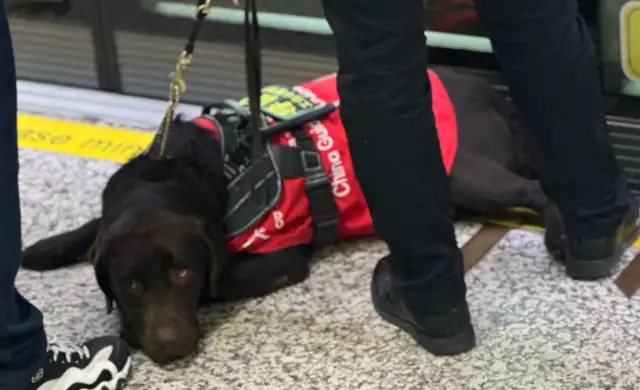
In recent days, a visually impaired blogger, who had posted a video on a social platform, was denied permission to enter a restaurant in Shenzhen with a guide dog in a chain hotel. In coordination with the police and the hotel reception, the owner was placed in other nearby hotels. The topic is hotter. An apology announcement was subsequently issued by the shop. At present, the shop has been set up as a residential facility for guide dogs.
The guide dogs are “eyes” for persons with visual impairments, which help them to escape barriers, travel safely and guarantee their equal participation in society. The Law of the People's Republic of China on the Construction of a Barrier-free Environment clearly states that: “The operators of public places, transport facilities and public transport means shall facilitate the transport of service dogs such as guide dogs, guide dogs and auxiliary dogs to persons with disabilities.” Hotels are open, public and serviceable and are widely recognized as public places, so that hotels should allow persons with visual impairments to carry guide dogs.
This denial of access to guide dogs is behind this phenomenon and reflects a lack of awareness of the concept of accessibility at the door. Many people, including staff in some public facilities, lack the ability to distinguish between guide dogs and general dogs. Real solutions to these problems require not only the removal of legal and institutional barriers, but also the removal of perceived barriers and the removal of more damaging non-physical barriers through a wide range of outreach activities.
Through media science and interaction activities, people can understand the professionalism and importance of guide dogs, understand the distinction between work dogs and common pet dogs, and mitigate fear and misunderstanding. At the same time, through experience activities and public service advocacy, accessibility is recognized as an important component in building inclusive societies, not only for people with disabilities.