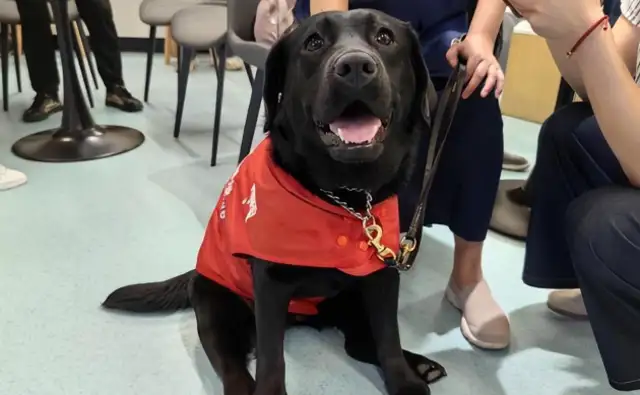
In recent days, the Shaanxi Museum of History has been controversial for refusing to allow a blind person to accompany a blind dog. The museum indicated that neither animals nor guide dogs were allowed in the museum, but volunteer escorts could be provided to blind people. The blind group believed that the guide dog was a work dog, not a pet, and that the guide dog should be allowed in public places, that he had successfully entered the Jiangsusu County Museum with the guide dog, and that the Yangzhou Grand Canal Museum had agreed to his application.
This visually impaired blogger stood in front of the Shakira Gate with a bright guide dog. He recalls that three years ago at the Suzhou Museum, the staff took the initiative to direct Ash through barrier-free access and also provided Braille guides. At this point in time, the staff members of the Global Voices Department have repeatedly stressed that “visiting requires that animals be prohibited from carrying”, and even proposed a “carrying blind dogs”.
"Ash is my eyes, and I can't walk away from it." To brightens in the phone. This controversy has given rise to legal debate: the application of the Regulations for the Construction of Accessibility in the province of Shaanxi has made it clear that persons with visual impairments may enter public places with guide dogs. In contrast, museums in Suzhou, Yangzhou and others have set up `Guess Dog Friendly Channels' and trained volunteers to provide collaborative guided tours.
The event ended with a history of adjustment policies, but the contradictions behind it remain. As Ms. Lee, Advocate of Disability Rights, has said: “The museum protects not only antiquities, but also the temperature of civilization.”