Designation: PET3347
English name: Purple Splendid Cichlid
Origin: African Cameroon and the lower Netero River basin of Algeria
Vulnerability to disease: end-of-life disease
Life: An overview of the type of phoenix 5-6 years
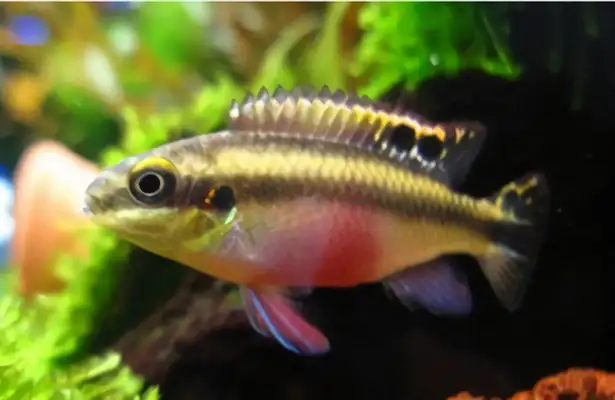
Red belly Phoenix.
The phoenix can be a representative species of West Africa ' s phoenix, given that the phoenix covers metallic blue light in the light, very beautiful, and because the phoenix is slightly red in its abdomen.
Name: Red belly Phoenix
School name: Pelvicachromis pulcher
English name: Purple Splendid Cichlid
Origin: The appearance of the phoenix in Africa, Cameroon and the lower Netheru River basin in Algeria
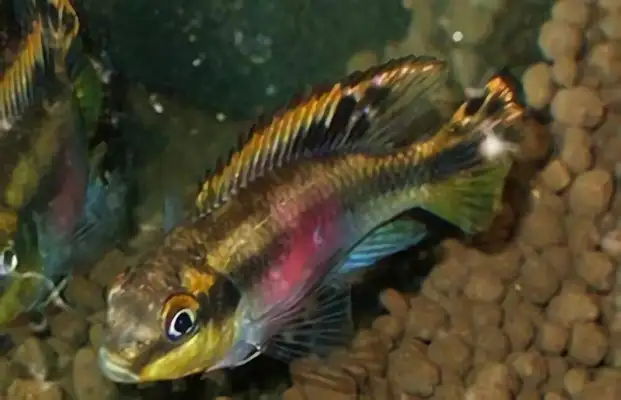
Red belly Phoenix.
The temperament of the phoenix, with no special requirements for water quality, and its high environmental resilience, is a representative species of West Africa. Because of the unique shape of the phoenix, it's very popular with fish friends.
The phoenix is usually 8-10 cm long, and the phoenix is a representative species of West Africa's short-breed, which has a small body, a blue part of its back, and a blue, metal-colored light under the light. The phoenix's abdominal is slightly red and therefore famous. The male tail fins rise in sharp shape, with a dark black horizontal liner on the body of the fish, with darker colour spots on the back end of the back fin and on the upper part of the tail; only the female has darker colour spots on the back end of the back fin. At the same time, the male is slightly larger than the female, while the female has a relatively bright red abdomen. Red belly phoenix breeding environment
Red belly Phoenix.
The phoenix recommends 24-27°C for rearing, 8-12dGH for hardness and 6.2-6.8 for acidity. The phoenix is mild and highly adaptable.
The red belly phoenix prefers to dig holes in the gravel layer, but does not hurt the surrounding waterweed. It is a benthic fish with a distinct den-like character, so when it is raised, the red belly phoenix is raised. It would be preferable to place in the aquariums a number of fibre-skinned coconut shells or objects such as small flower basins or varnishes for their shelter, shelter and safe breeding grounds. I'll have some food for the phoenix.
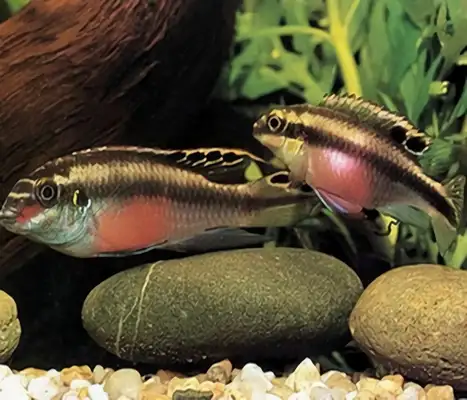
Red belly Phoenix.
Feeding the phoenix is easy, although the phoenix is groin-like, but they prefer animal bait, and artificial feeding of the phoenix needs to be well nourished, and do not give life bait because the phoenix prefers animal bait.
The phoenix, which is an all-emergence fish, can receive thin slices or granule feed, and can eat fresh hatched shrimp, halogens, mosquito larvae and even vegetables, such as pumpkins. To ensure their health, a wealth of things should be provided. The phoenix is a benthic type of fish, and it is best to provide food that can sink. Adequate nutrition should be provided before pro-fish breeding.