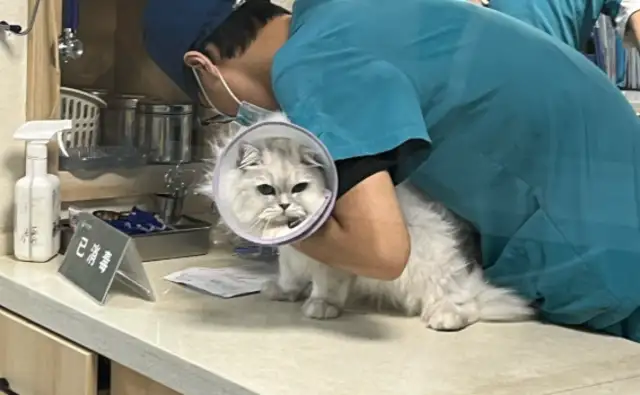
In recent days, Ms. Lin, in the waiting area of a pet hospital in Beijing, is holding a 10-year-old young “mits” awaiting medical examination. "It's been staring at my stomach lately and trying to grab my pajamas with claws." She described it to the doctor. Such behaviour reminds her of the online rumour that “cats can smell cancer” and that, despite the doctor's observation that there is a lack of conclusive evidence, she has requested an increase in cancer screening.
The results shocked all: Ms. Lin had early ovarian cancer. The attending physician stated: “Although it is not possible to prove a cat's warning role, this phenomenon is worth studying.” Indeed, there are many studies around the world that show that dogs can identify cancer by sniffing volatile organisms in urine, with an accuracy of over 90 per cent. And cats have a slightly lower sense of smell sensitivity than dogs, but 200 million sniffer receptors in their nasal cavities are still far superior to humans.
Behind the controversy is the complex human feelings about animal instinct. As Professor Zhang, the oncologist, said: “We cannot devolve pets, but we should not lose sight of the life that they may bring.”