The presence of stray cats and dogs in populated areas is more common, and many lovers tend to feed stray animals at times, but who is responsible for harming the population in such zones? In recent days, the Municipal Court of the People ' s Court of the Senzhou District has considered a case of violation of the obligation to protect, and a property company has been ordered by law to pay compensation of $636.3 for the medical expenses of owners who were injured by stray cats.
Basic cases
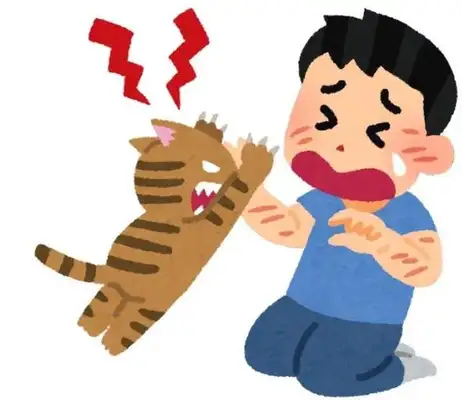
A 13-year-old Chen Yai lives in a small district of the city where a property company is the property manager. On 21 November 2024, Chen cycling through a bush in a small district park, when he found a stray cat, he stopped the bicycle at random and went to the bush, repeatedly provoking wild cats with his elbows. It never occurred to me that wildcats suddenly stormed, with sharp claws breaking a school uniform and leaving several blood marks on their arms. “The child's arms are full of blood!” Mother Chen called the police immediately and took photographs of the scene. The following day, Chen, accompanied by his parents, went to the Community Health Services Centre for rabies vaccination at a cost of $2121.
When Chen was wounded by a stray cat, his parents filed a unsuccessful claim for compensation with a property company and brought it to court. One of Chen ' s fathers claimed that from 2021 to 2024, it was common to find out that the owner of the colony had been feeding a stray cat, and to address the property company on several occasions, asking the property company to clean up and contact the feeding company to make it clear that it could not feed a stray cat. The property company, on the other hand, argued that, prior to the incident in which Chen had been scratched by a stray cat, a notice prohibiting the feeding of a stray animal had been sent through a bulletin board, a poster by the owner community, that the contact house had carried out a vagabond capture operation, that there had been regular patrols to catch a vagabond, and that one of the injuries had been caused by his own initiative.
Court hearings
After hearing, the court held that the property company, as manager of the small area, had an obligation to guarantee the basic security of the small area and that effective measures should be taken to prevent accidents in the case of stray animals entering the small area who could not identify the breeder or manager. Although the property company submitted evidence of its actions in relation to the ownership of the complex, notices in the bulletin board and the capture of stray cats, it failed to take reasonable measures to sustain the eviction and, following a complaint from the owner, did not further upgrade its management techniques. While carrying out part of the management function, there are still management deficiencies, which should be subject to the corresponding secondary responsibility to the extent that the damage can be prevented or stopped.
At the same time, Chen, as a person with limited civil capacity, already has a certain cognitive ability to know that a stray animal may be offensive, but his parking and repeatedly defusing stray cats directly results in damage and is self-inflicted at risk. The primary responsibility lies with his guardian, who knows that there is a stray cat in the district but who does not adequately advise Chen to stay away and who is not present at the time of the incident.
In light of the factual circumstances of the case, the court, where appropriate, supported the 30 per cent liability of the property company and the remaining portion of the liability of the guardian. A property company was legally awarded compensation of USD 636.3 (2121 x 30 per cent) for certain losses. The medical costs of the abdominal pain claimed by Chen are not supported by the fact that he has not submitted evidence that he was bitten by a stray cat and claimed that he was accompanied by a parent, because he has not submitted evidence that he did not work. Following the judgement in the case, neither party appealed.
The judge's statement
In recent years, environmental, health problems and harmful accidents caused by stray animals have become the focus of social attention. Although the feeding behaviour of some lovers improves the lives of homeless animals, it does not achieve effective control over them. In the event of injuries caused by stray animals, the feeder may face legal liability. At the same time, property companies, as managers of small areas, should effectively fulfil their safety and security obligations and deal appropriately with the problems that may arise from stray animals. Parents, as guardians, are also required to strengthen the care of their children and to alert them to the need to protect themselves from accidents.