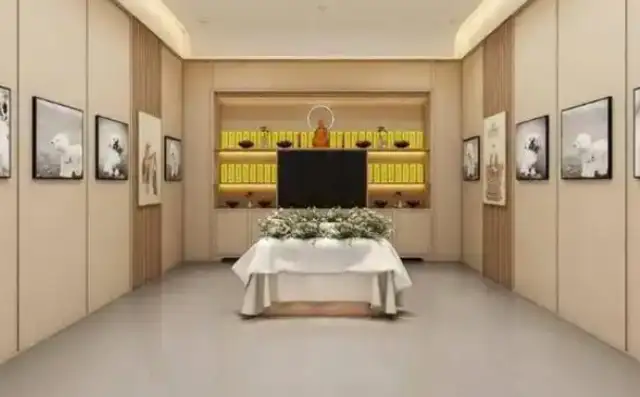
When after 90, the girl fell in the corner of the living room, staring at the body of the orange cat Money, who had been with her for nine years, she had no idea that a simple farewell ceremony would turn into a long game with the merchants. This winter morning is becoming a microcosm of millions of families in China. The burial of pets, a grey industry once hidden in the corner of the city, is expanding to 100 billion-scale markets at a rate of 174 per cent per year, but under the climate of emotional consumption, systemic crises such as lack of regulation, poor pricing, and shrinking services are exposed.
I. THE EMOTIONAL ECONOMY RESPONSIBILITY PURPOSE
The brutal growth of the Chinese pet burial industry began with a silent pet revolution. In 2024, the urban pet consumption market was over $300 billion, and of 120 million cats and dogs, 3 million were at the end of their lives each year. In Chengdu's timehill pet burial centre, which invests $20 million in glass cremation rooms, the pet owner can view the body on screen for the whole process, and this "whole-looking" service is becoming the new industry. When the percentage of pets after 90 and after 00 was 72 per cent and a single funeral service paid more than $1,500, the pet burial evolved from a simple body disposal to an emotional healing industry chain.
Market data attest to this shift: the industry was 1.825 billion yuan in 2023 and is expected to exceed 5 billion yuan in 2025. High-end custom packages have 25 per cent penetration, including derivatives such as pet ashes diamonds and 3D printed statues, with a premium of up to 300 per cent. In Shanghai, “Pet Heaven”, basic cremation services were packaged as “Little Stones of Life”, which compressed the ashes into a locket with a sale price of $8888, and a “virtual memorial” launched by a Beijing agency, using VR technology to recreate pre-birth images of pets at an annual cost of $3999.
II. The law of survival of grey areas
Under the appearance of prosperity, the industry is in shock. The Guangzhou pet owner Yeong found that the platform sold 29.9 dollars of urchin cans, which rose sharply to 99 dollars in funeral shops; and, more alarmingly, some commercial industrial incinerators used to treat pet remains, with a high risk of dioxin contamination. On the site of the Shenzhen Tree of Life project, where ashes should be planted on the land of the memorial tree, the bones of animals from unknown sources are mixed.
Lack of qualifications has become a persistent problem in the industry. Only 31 per cent of the country ' s more than 8,000 pet funeral facilities have obtained an " animal vaccination certificate " . Although the Joint Fertilizer Agency claims to provide a “certificate of non-hazardous treatment”, it does not comply with the procedure through a network of animal quarantine services. More generally, there is a “back-box cremation” disorder: merchants carry second-hand medical incinerators with modified vans, operating illegally in urban and rural interfaces.
III. Industry Breakouts in the Crisis of Trust
Regulatory vacuums are eroding market confidence. Mr. Shanghai's experience was quite typical: he was initially told 800 dollars for full-process services, but was eventually induced to buy 2,000 dollars for pet cemeteries. This “low-and-low” pricing strategy has led to implicit sub-rules within the industry. A pet funeralist revealed: “The basic package is a pilot product and 70 per cent of the profits come from additional services.”
The road to the end is showing. Chengdu's Time Hills introduced block chain technology to create digital identity files for each pet to ensure that the ashes' DNA is traceable; Shanghai's Rainbow Planet, in collaboration with psychological counselling services, developed a pet grief counselling course to extend services to emotional healing. At the regulatory level, Beijing and Shanghai pilot certification systems for the disposal of pet remains require funeral facilities to be equipped with low-temperature plasma sterilisation equipment and to meet EU standards for pyrochemical tail gas emissions.
Mirror projection of the civilisation process
The evolutionary trajectory of pet burials reflects a profound shift in the perception of life in Chinese society. When Shenzhen included pet ash-growing areas in the urban greening plan, and when a community in Hangzhou introduced “Life Education” classes, the industry was breaking out of business and becoming a new measure of social civilization. The data show that centralized handling of pet remains can reduce soil/water pollution by 83 per cent, reducing public health expenditure by approximately 1.2 billion yuan per year.
A three-dimensional development framework for science and technology + humanities + regulation is urgently needed in the pet burial industry at the crossroads. For practitioners, there is a need to maintain a sense of fear for life and to establish transparent standards of service; for regulators, there is a need to improve quality clearance and price regulation, as well as to encourage environmentally sound technological innovation. After all, the degree of civilization in a society is measured not only by the attitude of the same kind, but also by the treatment of the “buff children” who have given us warm company. When each pet is given a dignified farewell, this society truly deserves the word “civilization”.