Title: PET3039
English
National origin: China, Japan, Philippines and Europe and the United States.
Vulnerability: leukemia, gastrointestinal disease
Life: 20-30 years
Price: A brief description of the species of Chinese grass turtles at $20-50
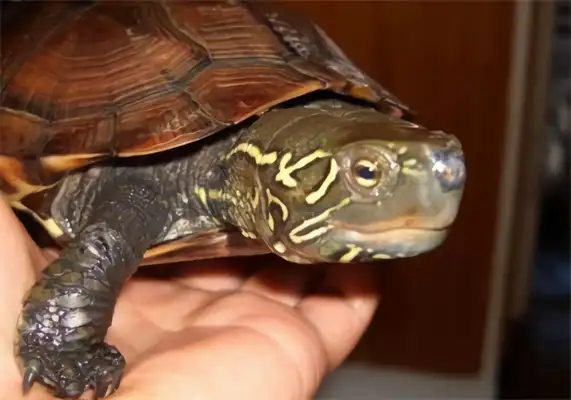
China ' s most common indigenous species, with access to medicines and beauties, are more economically efficient species that are not usually expensive to buy, and are likely to be seen in some water pools, with a certain chance that the male turtle will become black, so it is called turtles.
Chinese literary name: Chinese turtle
Don't call it long-lived turtles, gold turtles, turtles, turtles, turtles.
Latin name: Chinemys revesis.
English
Context: Animals
Gate: Pipeline gate
Programme: climb
Tortoises.
C: Turtles
Yes: Oogway
Plantation: grass turtles
Region: Mountain Creek, Lake, Wetlands, Rivers, China, Japan, Philippines, and Europe and America.
Appearance characteristics: Tortoises are elliptical, with a slight rise in the back of a manicure, with three lines of ellipses and a clear vertebrae. Black olive on top, smooth on the front, thin on the back.
Lifestyle: Watery amphibious. Tortoises breathe through their lungs and have horny, well-developed diamonds that reduce water evaporation. Sexually mature turtles lay eggs on land without having to go through a fully aquatic stages.
Reproduction habits: spawning, with a female tortoise laying 3-4 times a year, 5 per den, 2-7 per den
Eating: Tortoises are impregnable animals. In nature, animal feed is mainly for worms, small fish, shrimp, snails, clams, earthworms, animal bodies and internal organs, hot pig blood, rotting meat, etc.; plant feed is mainly for plant leaves, melon fruit, wheat. China Straw Turtle Form Characteristics
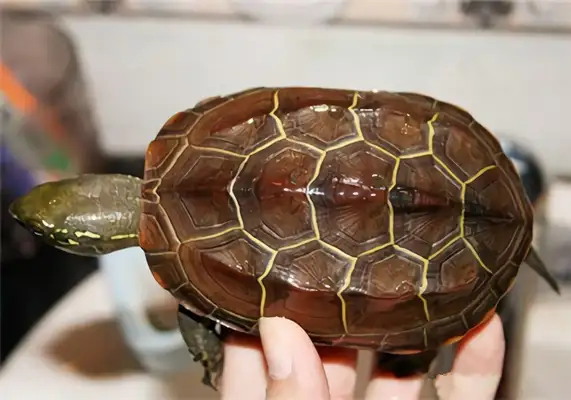
It is easier to distinguish between species, with three elastics on the back being the most obvious feature, with green gravitation on the head, brown on the back, small and thick limbs, slow growth, small size, and possibly black on the male body.
The Chinese herd turtle is in a long elliptical shape, with a small rise in the back of the mantle, with three lines of ambiguity, which is clear. Black olive on top, smooth on the front, thin on the back. The abdomen are flat, the back end is missing. The neck, limbs and bare skin parts are grey black or black olive. The head, neck and side of the neck have yellow line marks, with three vertical rises and no sawn teeth.
The male back of the Chinese grass turtle is black or black, the female is brown, with some yellow on the abdomen, all with dark brown stripes; the limbs are flat, with claws, and the toes are full of abdomen. The male is smaller, has long tails, stinks. The female backslids range from light brown to dark brown, abdominal tan, short tails, and smell-free. Female tortoises are more difficult to distinguish before sexual maturity, and when sexual maturity occurs, female tortoises can be identified from their external characteristics. China ' s grass turtles are highly adaptable to the environment, have lower water quality requirements, have greater tolerance for poor water quality, have high intensity farming without mutual killing and low prevalence. Knowledge of Chinese grass turtle care
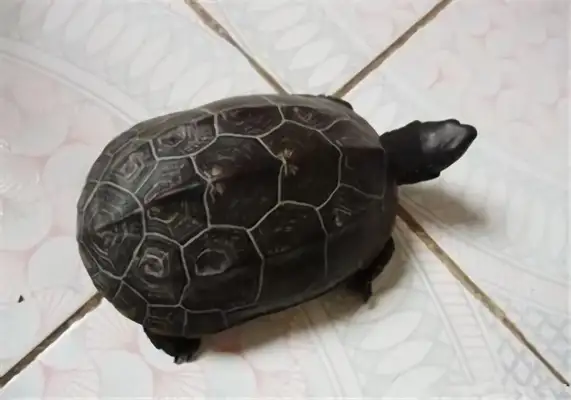
China ' s grass turtles are relatively easy to breed in large numbers and are adapted to human farming, which can generally begin with reproduction and continue with human participation until incubation and breeding, so that it is a more suitable breed.
Tortoise food is widespread and can be eaten by small fish, shrimp, snails, mackerel, vegetables, rice, etc. Generally, when the temperature rises to more than 15 degrees, it starts eating. The food season of June-September began to decline in November. When water temperatures fall below 15 degrees into hibernation. Temperatures are low in the spring and autumn, feeding time is set at 8-9 a.m. and turtles move in the middle of summer, and baits should be delivered at 4-5 p.m. Turtles swallow in water while eating. Tortoises consume about 4 per cent of their body weight and are fed the following day, after which they are cleared in time to prevent contamination. It is important to keep the water fresh. Tortoise growth is related to the quality of feeding, which is usually fed to animal baits with an increase of about 50 grams per month.
Tortoises are mainly hostile to snakes, water rats, weasel, wildcats, etc. In the summer, turtles often travel at night and water rats and weasel go in and out at night, and turtles, though protected by hard shells, are vulnerable to enemy bites and death. In addition, when eggs are corruptly spoiled, large numbers of ants are often recruited to endanger eggs and child turtles, to the detriment of turtle breeding. Care must therefore be taken to remove these enemies and to provide the raised turtles with a good ecological environment for their reproduction and growth. Living environment of Chinese grass turtles
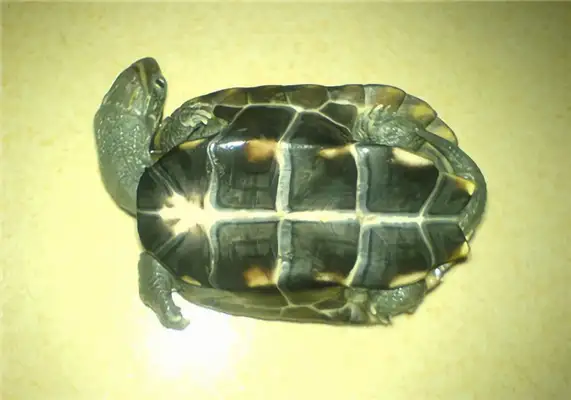
China ' s grass turtles are not environmentally demanding, and generally a simple tortoise can be raised, but for the health of the tortoises, a sunscreen is usually set up, and the tortoises like to tan their backs and rest on them.
Tortoise breeding grounds should be selected for wind avoidance, sunwarding, and water-drinking pits: general water depth of 1 to 1.5 m and bottom slopes of 1:2 or 1:3. The pool is covered with plumes, peanuts or cucumbers in approximately one third of the pool area, with a wall of 0.5 to 1 metre high around the pool, which is 30 centimetres into the soil and protects the turtle from flight. The wall contains an open area of about 1.5 metres long and about 1 metre wide (a few areas can be left); or an island of about 5 per cent of the total area is left in the pool to pile up a suitable amount of sand for turtles to lay eggs.
The living space of the grasshopper determines its healthy growth and has a direct impact on farming effects. As a result, farms require the selection of areas that are northwards, well-silent, fresh air, abundant water sources, easy to drain and clean without contamination or noise. The water is good, and many people think that water can be deep if there is a rock or platform that is exposed to the water (a little deep water is really rewarding, and water quality is not easy to deteriorate, fish turtles can mix, and I like it very much), but if the water is deep, turtles need to consume more physical energy to the surface, which can result in excessive physical consumption of turtles and the risk of drowning for poor-quality grass turtles. The point of the Chinese weed turtle.
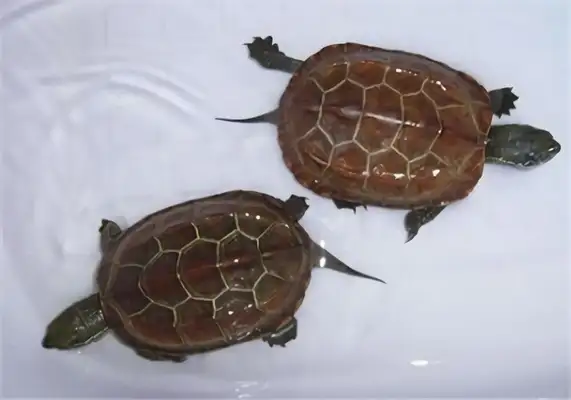
Straw turtles are grotesque turtles, which can usually feed some meat or plants, and some turtles can be well adapted to turtle food, and long-breeding turtles can ask for food from their owners or train hands to feed.
Shelled turtles are delicate and should be raised separately and carefully managed. A separate cement pool is generally used, with one third of the inland area and two thirds of the water, and is properly fed to fine feeds such as prepared proteins, yolk, noodles, rice, broken fish and shrimp. It's usually the best way to separate a turtle from a turtle. Most of the methods of wintering by a turtle are indoors with a wooden plate, 20-30 centimetres of sand in the plate, and then a calve of 0.5 centimetres in the sand, covered with veils and a proper amount of warm water.
Tortoise food is widespread and can be eaten by small fish, shrimp, snails, mackerel, vegetables, rice, etc. Generally, when the temperature rises to more than 15 degrees, it starts eating. The food season of June-September began to decline in November. When water temperatures fall below 15 degrees into hibernation. Temperatures are low in the spring and autumn, feeding time is set at 8-9 a.m. and grass turtles are expected to move early and late during the summer, and betting should take place at 4-5 p.m. Straw turtles eat while they swallow edema. Straw turtles use about 4 per cent of their body weight to feed them the following day, after which they must clean up the residues in time to prevent contamination. Keep the water fresh. The growth of grass turtles is related to the quality of feeding, which is usually fed to animal baits, with an increase of about 50 grams per month.