On the streets of Lanzhou, a white puppy's cry broke the night sky. The video hurt people: two young people repeatedly threw it into the green belt, while the dog struggled to come back, but was brutally pushed away. Eventually, it can only see the master go away. The incident quickly detonated the network, and the tweet “# Refusal to Abandon Pets#” skyrocketed to 280 million readings, with social anger and care intertwined.
The tragedy revealed not only the lack of responsibility for some of the feeders, but also the deep-seated dilemma of the pet management and protection system. An abandoned life whose cries are silent complaints and tortures social civilization. We must go beyond condemnation, build structural solutions, put an end to vagrancy and promote social civilization.
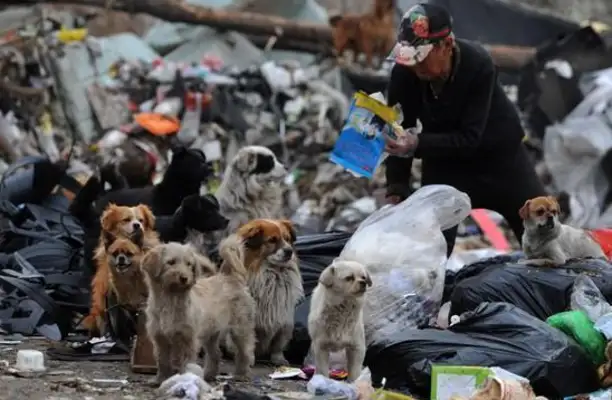
Those who rescue stray animals feed many stray dogs and cats in the dumps.
At present, pet abandonment is on the margins of law and morality. Although a fine is imposed in Lanzhou, our Animal Vaccination Act only targets sick or dead animals. There is a lack of clear and strong national penalties for the abandonment of healthy pets. This often allows for the abandonment to avoid substantial consequences.
Legal gaps undoubtedly contribute to the spread of irresponsible and apathy. Psychological studies reveal that 68 per cent of customary abandonments of pets have emotional apathy. This apathy may extend to interpersonal relationships, causing wider social harm that must be filled.
The consequences of abandonment go far beyond individual tragedies and are creating serious social problems. Data from the Ranzhou Small Animal Protection Centre show that in the first half of 2025, 1,273 abandoned pet dogs were received, a 37 per cent increase over the same period. More than 60 per cent of them are dogs, whose survival in the field is less than 10 per cent.
These abandoned domestic dogs are threatened by hunger, disease and car accidents. In 2024, 43 per cent of dogs suffered from skin diseases, 28 per cent from malnutrition and 15 per cent from car accidents. Abandonment has also led to an exponential increase in the number of stray dogs, who can breed two to three cubs per year.
The reception centre is overloaded, consumes 12 tons of dog food per month, spends as much as $80,000 on medical care and is running out of resources. The proliferation of stray animals has placed great strain on urban management and public health and has become a painful point for social governance.
Ending vagrancy requires concerted systemic change. First, the improvement of animal welfare legislation at the national level should be accelerated to clarify the responsibility of feeders and establish more deterrent penalties for abandonment. Explore the establishment of a “blacklist” system for pet feeders.
Second, strengthen source management. A mandatory pet registration system is introduced, with chip implants, to achieve a “one dog, one size” full life cycle management. Compulsory vaccination and sterilization, which fundamentally control the number of stray animals.
At the same time, universal animal welfare education is essential. Let the feeder realize that rearing is a lifelong commitment, not a whim. Raising public awareness of respect and responsibility for animal life and creating a good social climate.
Finally, wider end-of-pipe placement channels. Social forces are encouraged to participate in the rescue of homeless animals and to establish easy and regular care and resettlement processes. “Retired” means of compliance, such as assistance in transferring or finding a new foster family, are provided to needy feeders.
The establishment of a special support fund for pups and the attraction of 37 families to apply for adoption are evidence of the positive response of social forces. This indicates a strong public willingness to protect animals, requiring Governments and society to build bridges together.
The dog's cry is a warning to social civilization. Treating animals is a respect for life and, above all, an important building block for building harmonious societies. Only if the legal fence is tighter, the moral base is stronger, and social assistance networks are denser can we truly leave behind the tragedy of pet abandonment and give every life the respect and peace it deserves.