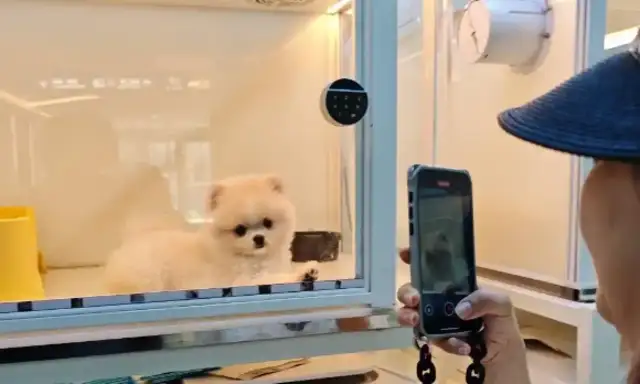
According to China Newsweek, there have recently been closed-down or unsustainable operations in several prominent pet stores. The pet shop, which provides high-end foster care and high-end care for pets, has become a consumer rights hotspot.
Traditional pet shops are a trade based on crafts, human services and reputation, with limited profit margins. But in recent years, the pet economy has sprayed. The 2025 White Paper on the Chinese pet industry (consumption report) shows that our urban pet consumption market exceeded $300 billion in 2024. Faced with such a large market scale, many people rush into the game and face reality.
The characteristic of the pet industry is that it is not a capital game that can be won by those who finance and burn. The pet shop has also begun to “run”, suggesting that the pet industry needs to “go foam”.
In the case of a hard-to-reach high-end pet shop, the image has been shown abroad: $200,000 of stairs, Ferraris, $75,000 for members, $699 a night for foster care, and $1,000 for beauty services.
But these so-called high-end, extravagant feelings are designed for pet owners — only human beings have the need to identify and socialize. For pets, their happiness depends on daily company, regular diet, adequate exercise, and familiarity with the sense of security created by the environment, rather than the price of stairs and the branding of cars.
Deluxe renovations, high-end equipment, and such openings mean high input and high operating costs in the early stages. An important reason why the high-end brand pet shop is not sustainable, as described by the source, is to pay $100,000 a month in rent. With regard to the content of the services, foster care is also good and beauty is good, although demand is immediate, but consumption is limited.
High-end services are difficult to scale when there is strong competition for affordable services. It is true that a high-value membership can recover a certain amount of cash flow, but the operation is based on a cumulative flow of services rather than a pre-paid game of food. Once the financial chain breaks, closing the door “runs” is about the odds.
Some want to remodel the pet industry by replicating the business model of Internet businesses: standardization, chaining, membership, burning money flows, expanding markets, etc. However, this heavy packaging and light service package has proven to be only short-term exposure and does not build long-term trust. Currently, this model has not been replicated in the pet industry.
Unlike Internet enterprises, the uniqueness of the pet industry is that it is a face-to-face service, an off-line, non-standard, personalized service. Those systems and processes that seem to be highly technocratic are almost useless when faced with a dog with a severe anxiety or a sick diarrhea.
The ability of a pet shop to re-enter is highly dependent on the professionalism of the practitioners. This type of talent development has a long cycle and is highly mobile, with the possibility of a number of clients being taken away from the job by a branded hairdresser.
That is why it is not surprising and not necessarily a bad thing that pet shops that rely on packaging, stereotyping and “stacking” of high-value finance have been marketed out.
On the one hand, it is a warning to the market that industry regulation must not be absent, especially in respect of high upfront charges, exaggerated marketing, service failures, etc., and that effective management and accountability mechanisms need to be put in place to prevent the pet industry from falling into a “prepaid fee trap” by relapsing into such industries as fitness, beauty and education.
On the other hand, it is also a reminder to consumers. Caring does not amount to flaunting, rather than superstitious luxuries labels, rather than returning to rational consumption and replacing blind emotional projection with scientific ploughing. A pet is not a tool for human socialization, but a life partner who needs to be accompanied, cared for and understood.
At the same time, entrepreneurs and investors are reminded that the overall size of the pet industry is still expanding and that there is considerable consumption potential, but this is not a fast-forward, much less a financial instrument.
It's time for the pet industry to go to foam. As industry regulation is improved and consumers mature, pet agencies that are truly focused on animal welfare, professional services and standardized operations will emerge from rational competition. After all, it is the service itself that ultimately wins the market.