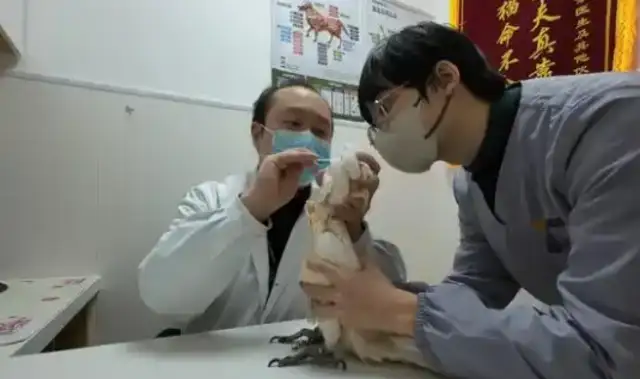
Seven teeth were missing from the dog sterilization operation, the pet's “name doctor” took up his job without a warrant, and the cost of the same examination varied several times.
A survey of Xinhua Vision journalists found that the health needs of pets are receiving increasing attention as the number of foster families increases. At this stage, however, there is an imbalance between supply and demand in the pet medical industry, differing standards and regulatory delays, with many pet owners having headaches about taking a pet to a hospital.
There's a lot of bad things about pets.
At the beginning of this year, “after 90” girls, who were sick in their pet twigs, contacted a number of local pet hospitals and had to go to neighbouring cities for treatment. However, doctors in neighbouring municipalities have given surgical advice without having the conditions to operate and have to carry their pets to the capital city.
Patient difficulties are not a case in point, and there are a number of pet owners who complain, and some pet hospital doctors are unprofessional and of uneven quality.
In March of this year, 10 typical cases of consumer advocacy were published by the System of Consumer Associations of Yangzhou, which included “7 teeth missing from dog sterilization”. It was found that the seller had failed to comply with its pre-operative risk notification and operating protocol, and was required to refund the cost of the surgery and to bear the cost of subsequent dental examination.
Ms. Zhu ' s pet dog refused to eat, and was diagnosed as pancreas in the first hospital, at a cost of thousands of yuan for examination, prescription and injection, but has not improved. Another hospital diagnosed gastrointestinal inflammation, after which the dog began normal feeding.
One of the main points of concern is the high cost of the care of the pets and the disarray of fees. Journalists visited and found that the same examinations and treatments involved a difference of several thousand dollars between the fees charged by some pet hospitals. "My pet cat is having trouble pissing. The first hospital costs more than 9,000, the second is about $5,000. "Lin, Guangzhou says.
The difference in the cost of care at individual pet hospitals is also apparent. “My cat vomited at night and questioned the surrounding pet hospital, some for $200 and others for $500.” According to a pet owner.
In addition, there have been frequent problems with pets in recent years. When the pet owner was sterilized to the cat, she was found to have an abscess in her uterus. The doctor first asked her to buy someone to inject drugs and then called the cat a tumour requiring chemotherapy, but the drugs provided were not available. “The hospital said it was imported veterinary medicine, and I took it to examine it and found that there was a problem with its quality.”
Journalists have looked at cases of violations in the animal medicine industry that have been published at various locations and have found that there are numerous cases of counterfeit medicines, illegal use of medicines, etc. The head of a specialized pet pharmacy in Fujian told journalists that some illegal merchants sold drugs without a license and scraped the two-dimensional code when selling them; in some hospitals, the drugs were packaged in purely English and not even known by the hospital.
What's the problem with pet medical disorders?
A journalist survey found that the confusion behind it reflected a contradiction between the supply of and demand for pet medical services.
Data from China ' s White Paper on the pet industry (Consumer ' s Report) 2025 show that in 2024, the urban (dog and cat) consumer market in China was over 300 billion yuan, with the health market accounting for 28 per cent; the number of exotic breeders was about 1.770 million.
In response, in 2024, we practiced veterinary medicine totalling approximately 170,000 people, of whom about 40,000 were working in pet medicine.
Shuhui Hao, Associate Professor at the Faculty of Animal Medicine of the University of South-West, said that most undergraduate institutions specialize in animal medicine or animal husbandry, that the teaching of higher education is dominated by economic animals and that there is a scarcity of pet specialists. “Veterinary graduates are more likely to be employed in veterinary medicine and agricultural-related enterprises.” Dr. Kang Dishang, Shenyang Yi Ga Animal Hospital, said.
“There are more than 30,000 seemingly large national pet hospitals, but they are concentrated in second-line cities, with less than 30 per cent coverage in third- and fourth-line cities and rural areas, and individual pet medical institutions and doctors lacking even professional qualifications.” Zhao Jia Hao, head of business sales at Chongqing Ei Technological Co. Ltd.
Under the Act on Animal Vaccination, we have a system of veterinary qualification, and registered veterinary practitioners are allowed to engage in animal consultations, prescriptions, etc. In recent years, journalists have found that there have been cases of medical disputes over pets in Guangdong, Heilongjiang and Qingqing, among others, where the attending physician has been engaged in medical activities without obtaining the relevant qualifications.
The gap between supply and demand for ambulatory treatment is even greater. Data from the pilot survey show that fewer than 20 enterprises are involved in the country ' s exotic hospitals. "There are too few hospitals to look at, and even fewer can look at." The owner of a pet spider said.
C.T. Equipment is worth millions of dollars, and some pets rely on imports and high prices ... There are many deep-seated reasons behind pet medical disorders, as described by many industry sources.
At present, fees for pet medical care are largely determined by market demand and industry self-regulation. “The pet hospital is basically a private enterprise with expensive equipment, large staff, and expensive rents.
Under Takamoto, a number of “extraordinary” techniques have been used by businesses for profit. According to a pet doctor working in Zhejiang, he completes a $100,000 to $120,000 monthly collection of KPI, which, according to the current, costs 400 dollars per passenger unit. “If the last case consumes just over 100 cases, the next case will cost him 700 dollars.”
KANG Dae-shan said that a number of businesses attract customers through a low-cost package and then “slaughterers” by adding service content; many foster new players face a great deal of project content, and they look at it and pay for it.
Let's turn "dumb" into "know the money."
Journalists have learned that the determination of liability for medical disputes over pets is difficult, that it is lengthy, costly and complex to handle through the judiciary, and that consumers in general give up and do not defend their rights.
According to the staff of the Association of Consumers of the West, pet medical disputes are often complex and involve a variety of aspects, including medical qualifications, use of medicines, fees, etc., involving a multisectoral sector such as rural farming, market regulation, etc., the division of responsibilities between sectors is unclear, and it is recommended that the subjects and responsibilities of supervision be further clarified, that the relevant laws and regulations for the protection of pets be improved, and that the rules governing the identification of the medical problems of pets, the allocation of responsibilities, and ex post compensation be followed.
Interviewees such as Ho Lilong, the director of the Fatty and Fatty Super Mall in Chongqing, suggested that the relevant departments should promote the development of standards for the pet care industry and the establishment of price guidance mechanisms for medicines and services; promote price transparency by requiring pet hospitals to publish price information via electronic screens or billboards, online public signs, etc.
“Practice should be strictly regulated and the practice of incompetence, etc., severely combated, with a focus on practical examinations.” According to Liu Xiaoxia, Deputy Secretary-General of the pet industry branch of the Chinese Livestock Association, reference can be made to initiatives such as the European and American countries that require a certain amount of continuous education per year for pet doctors to remain qualified for practice.
“In recent years, a number of colleges have introduced more targeted pet medicine-related professions. Professional ethics can be strengthened through joint training in schools to enhance the diagnostic capacity of practitioners.” Nagada said the principles of the Little Zoological Institute of Animal Medicine of Liaoning Province.
Some places are being explored with regard to issues such as pet medicine. Prior to this, Fukuda District, Shenzhen City, published the " Rules for the Implementation of the Temporary Use of Observative Medicines and People ' s Medicines in the Field of Caring for Clinical Needs Outside the Country " , which focuses on the 10 categories of diseases in which the current supply of veterinary medicines is inadequate, with a view to alleviating the stress of the shortage of medicines.
Hono and others recommended further strengthening the input of pet medical science and technology innovation and raising the level of information in the industry in order to promote the health of the pet health industry with quality supplies.