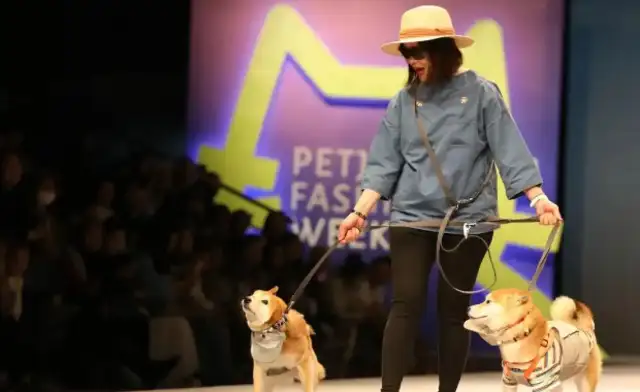
On stage T of Shanghai's Fashion Week, the beauty of fashion is shared with the owner; in a gourmet experience shop, customers interact with snakes and lizards; and in the pet supermarket, clothing, smart equipment, health care, etc. are full of light ... From “breeding needs” to “emotional consumption”, the pet economy is emerging as a new element of active urban consumption.
Build a new consumption scene
During the half-month talks, journalists saw numerous pet consumption scenes in Shanghai's pet fashion week, such as the launch of 15 pet show-in-the-shows brands, the Shanghai pet tournament-the-shut-the-shut-the-shut-the-shut-the-shut-the-shut-the-shut-the-shut-the-shut-the-shut-the-shut-the-shut-the-shut-the-shut-the-shut-the-Kyoton supermarkets, the ANFFF and Co-benefit Art Exhibitions and HappyPaw.
Today, the pet economy is increasingly linked to the arts and culture, coffee, etc. In collaboration with the Coffee Culture Festival, Shanghai Pet Week launched the "Pet Friendly Coffee Party" ; the Shanghai Museum organized the "Cyber Night" exhibition, which attracted cat viewers to play cards; and new forms of business such as the "Café Cat Cafe" are increasingly becoming popular consumption scenes for young people.
Data show that there are more than 100 pet-friendly malls nationwide and that many cities have introduced pet-friendly spaces, including restaurants, hotels, commercial complexes, etc., as important entry points for consumption. In Shanghai, more than 40 pet friendly parks allow “pure children” to “spray and discharge power” throughout the world or in designated areas and to construct “humanly friendly” consumer ecology. For example, in the Bay of the Su River, Vientiane has built a pet business cluster that covers such services as foster care, baptism, writing, tailor-made catering, etc.
Small crowds of pets and pets are breaking the traditional pattern of pet markets dominated by cats and dogs and becoming new pets for young people. In the Hwangpur district of Shanghai, the “ghost-and-ghost interactive pet shop” is the beneficiary of the exotic economy. The owner of the shop, Triedjoux, had been selling reptiles since 2016 and had previously had only 6 square metres. In 2022, he increased his experience of interactive petting in the shop and expanded the shop to 160 square metres. Currently, there are many kinds of pets in the store, such as snakes, lizards and spiders, which are popular with customers.
New trends in consumption
The trend towards “child-rearing” has led to a new trend in pet consumption. According to the White Paper on Trends in Pets ' Fashion 2025, published by the Shanghai Fashion Week, the China Professional Fashion Information Platform, POP-FASHION, the annual compound growth rate for pets was 13.6 per cent in 2018-2023. As caregivers, the 25 to 34 age group accounts for 61.7 per cent of foster “parents”, whose consumption decisions are mainly emotional.
“Dog food, snacks, clothing, toys, bathing, beauty, health care ... together, it costs a lot of money every month.” Ms. Lee, a “80s later” petist with a long-breed dog wearing a blue vest, made a rough check for the reporter. According to her, wee dogs are unique and prone to spinal and skeletal problems, and there are many health items that require daily supplementation, such as algae, joints, cartilin, fish oil, etc., at an average price of 100 to hundreds of dollars.
There are many “parents” like Ms. Lee who are finely nurturing. According to official data on treasure hunting, there has been an explosion in the distribution of pet health items. For example, the volume of frozen dry health products increased more than eight times over the same period, fish oil increased more than nine times over the same period and milk protein increased 12 times over the same period.
With economic and social development and the growth of the consumer capacity of citizens, the tradition of “home care” is increasingly being subverted. The pets are given the status of “family members” and even immediate needs for survival, such as food and clothing, are gradually being refined, and the consumer demand of the pets is shifting from a “survival” to a “quality”.
In Shao Xing City Square, Ms. Mao after 90 is conducting socialization training for her pet Corki. For more than a year, nearly every month, Ms. Mao arranges for professional pet trainers to conduct and socialize their pets.
During the spring festival, Juhan, who returned to Hubei's home after the New Year, decided to leave him alone in Hangzhou because he feared that his own cat would be “too busy” during the spring. In order to take care of the kittens, not only is the feeding service available at home, but smart cameras are also installed at home to master the cat dynamics in real time.
Stimulating consumption of new kinetic energy
According to the report on the development of the pet industry in China, published by the APA, the number of Chinese pet dogs and cats reached 187 million in 2024 and the size of the pet market exceeded 300 billion yuan. With the “familyization” of pets, demand for diversified services has begun to fuel the “long-tail market” and drive industry deeper.
“Puppets are no longer merely in the garment phase, but also produce pet rings, shoes, accessories, backpacks and even various intelligently worn products, and the relevant industries are developing into complete ecological chains.” Zhang Xin, Managing Director of the Shanghai International Fashion Center Park Management Ltd. and Project Manager for Shanghai Petty Week, said, “We are setting up a platform for participation in the brand by allowing the industry to develop”.
For the pet economy, when pets become “family” and roles are reshaped, much market space remains to be explored. For example, while pet-friendly businesses and hotels are on the rise, there are many visited pet families who wish to provide more facilities.
On 8 April, the railway sector piloted a high-level iron shipment service for “segregated transport, personalization, exclusive care” in parts of Kyoto, with the introduction of the “petty shipment” feature in railways 12306, with passengers making appointments two days in advance and above. Upon successful appointment, one domestic domesticated cat and dog can be transported with a good health condition, with a single weight of less than 15 kg and a shoulder height of less than 40 cm.
The nature of the pet economy is “emotional infrastructure”. Industry has pointed out that the blue sea of the pet economy is much more than the current upgrading of pet consumption when “pull children” become an important emotional dependency for urban people. With improved policies, technological empowerment and business innovation, the pet economy will point to a more humane social support system.