According to a recent ecologic research paper published by Springer Nature's specialized academic journal, Nature-Ecoology and Evolution, since 2013 the melting of starfish has resulted in the death of billions of starfish and the mass disappearance of algae habitats. A bacterial pathogen, Vibrio Pectenicida, was identified by researchers as a cause of seastar digestion through experimental research.
The results of this study are expected to assist coastal ecosystems affected by seastar digestion in developing remediation strategies.
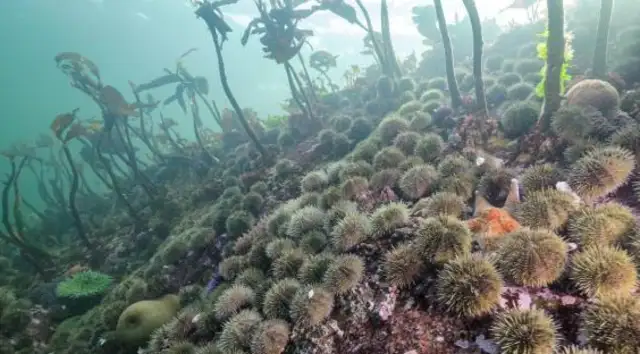
As sunflower stars are natural enemies of sea-borne herbivores (e.g. sea urchins), the decline in this species has led to a proliferation of sea urchins and the disappearance of large areas of sea belts.
The paper presented that the melting of starfish could lead to the disintegration of starfish and affect more than 20 species, such as sunflower. Since its emergence in 2013, seastar digestion has become the largest marine epidemic recorded among non-commercial species, destroying the Pacific Seastar population of North America from Mexico to Alaska. The disappearance of starfish will also lead to the rapid expansion and overexploitation of sea urchins that feed their populations, which are key habitats for many marine species.
However, more than 10 years of investigation into the causes of seastar digestion have been hampered by the lack of visible pathogens in infected sea stars and the lack of completely unexposed and healthy individuals from wild populations.
Researchers are examining an adult sunflower star (photo by Kristina Blanchfeller of the Hakai Institute).
In this study, Melanie B. Prentice, co-author of thesis, and Alyssa-Lois M. Gehman, University of British Columbia, Canada, together with their colleagues and collaborators, conducted seven cross-exposure experiments using wild and quarantined sunflower stars, suggesting the involvement of a living non-viral pathogens in starfish digestion.
The team then analysed the microbial population of the infected and healthy tissues from these stars in genetic sequences, thus identifying Vibrio Pectenicida, the pathogen, as a cause of the disease, and laboratory experiments to expose the star to the pure samples of the bacteria confirmed this finding.
This biscuit starfish shows a phase in the digestion of starfish (photo from Grant Callegari, Hakai Institute).
An expert “news and perspectives” article published at the same time in Nature-Ecoology and Evolution concluded that the results of the study might lead to cross-environment and species detection of starfish digestion, which would help to understand how the disease spreads and how it could be better managed to respond to outbreaks in wild populations.