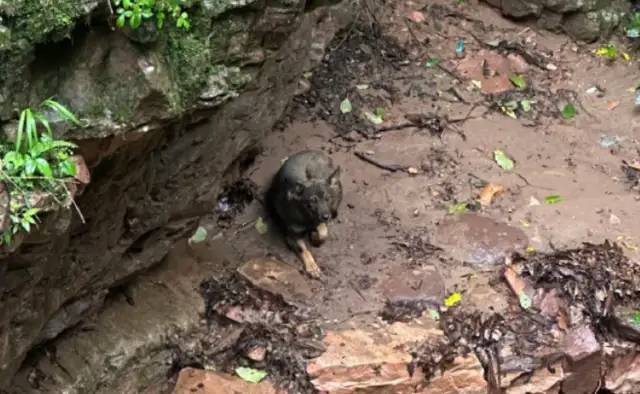
Earlier, the Visitors Service Centre in the Grand Canyon Landscape of Hebei received emergency calls: Deep in the waters of the canyon, two larvae are trapped in the cracks of the rock, and their abdomen are in critical condition. An animal rescue emergency plan was immediately launched in the scene area, and an eight-person rescue team consisting of the Department of Safety and Security and the Transport Unit quickly arrived with equipment such as ropes, life jackets and skis.
Upon arrival in the waters of the canyon, rescue workers discovered that two tan-black hybrid dogs were trapped in an isolated rock of about 2 square metres in the middle of the river, with water flowing around them at 3 metres per second per hour, and that the rock was wet and glitter and covered with moss, with high risks of direct water-related rescue. The head of security in the scene area, Li Jun, immediately set up a rescue programme: two experienced rescue workers brought safety ropes down from a 50-metre slope in the upper channel, rolled back up the wall and moved the dog to shore through a chandelier system.
In the course of the rescue, the floodwater struck many times on the legs of the relief workers, who moved slowly with their hands and feet and gripped the rock. As rescue workers approached, the frightened dog continued to sow, and one of them tried to jump towards the rescue staff, and the atmosphere was tense. Eventually, the rescue workers carefully wrapped the dog in an airbag and carried it to the shore by rope, which lasted three hours.
Upon rescue, the dog was immediately examined by the Veterinary of the scene area and found to be suffering from slight dehydration and skin bruises, as well as stable life signs. The two suspected abandoned pups were temporarily adopted by the employees of the scenery, known as the "Long" canyon, and are now adapted to the viewing area and become the "corpion pet" of the staff dormitories.
This operation revealed a lack of water protection facilities in part of the area. This was followed by a thematic meeting of the Landscape Management Service, which decided to add protective barriers and surveillance equipment to dangerous waters, such as the canyon canyon, and to establish a “fatal rapid response route for animal rescue” with specialized rescue equipment and emergency drugs. “Every life deserves respect, and the improvement of rescue mechanisms is both a responsibility to tourists and a reflection of the ecological responsibility to protect the landscape.”
In commenting on the point, wildlife conservation experts stressed that when tourists find trapped animals in the field, they must not take the risk of doing so without permission and should contact the scene management or wildlife protection department first. “Professional relief not only improves the success rate but also avoids secondary harm to animals from human activities, which is the basic criterion for living in harmony with nature.”