In recent years, the pet economy has witnessed an explosion of growth as the standard of living of our population has risen, emotional needs have become more pronounced and consumption attitudes have changed.
From daily pet foods, supplies to specialized medical care, beauty services, to emerging areas such as pet insurance, funerals, the market for pet consumption has been expanding and has developed in a qualitative, individualized and diversified manner.
The data show that the scale of pet consumption continues to rise and that the pet economy has become a new growth point in boosting domestic demand and driving up consumption, with strong dynamism and broad prospects.
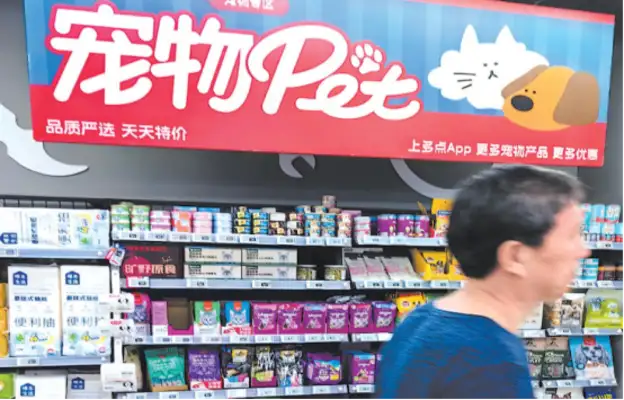
Since the beginning of the year, the pet economy has shown strong growth and consumption data have been innovative. This is illustrated by the fact that consumers pass through a specific area of pet supplies at a supermarket.
Market size continues to expand
Since the beginning of the year, the pet economy has shown strong growth and consumption data have been innovative.
In recent days, KPMG China has published its first in-depth survey on the pet industry, China's pet industry market report 2025, its “economic” consumption upgrading and market insight. The report shows that in the pet market, the size of the Chinese pet-related business market jumped from $97.8 billion in 2015 to $59.28 billion in 2023 at a compound annual growth rate of 25.4 per cent, with a projected growth potential of $81.1 billion in 2025.
According to China's White Paper on the Petty Industry 2025 (Consumer Report), which read the products from the big data platform of the pet industry, the size of the Chinese urban (dog and cat) consumer market grew by 7.5 per cent in 2024, to $30.2 billion. The report also notes the willingness of pet owners to invest more in food, medicine, supplies, services, etc. for pets.
According to the latest report on monitoring the performance of the Chinese pet industry and the consumer market for the period 2024-2025, published by APT, the size of the country ' s pet economy has remained positive and is expected to reach $1.15 billion by 2028.
On the back of the good-looking data is a consumer who is willing to smash real money and silver for pets and for pets. Ms. Lee, the pet owner of Beijing, shared the message: “My family has two cats, who used to buy cat dust, which is cheaper, and now focuses more on their deodorant effects, dust, etc. This year, when I was "618", I hoarded them several bags of high-quality cat sand and bought new cathouses and smart toys." There are no few pet owners like Ms. Lee, and it is their transformation in consumer behaviour that drives the growing size of the pet market.
At present, our pet economy has developed an ecological system covering the entire industrial chain of reproduction, medical care, food and services.
It is noteworthy that pet consumption is showing a trend towards “humanization”. “Pups are not only `family members' but are an important link in modern human pursuit of healthy lives.” The Chief of the pet nutrition and food team at the Feed Institute of the Chinese Academy of Agricultural Sciences and Secretary-General Wang Jin of the Technical Committee for the Standardization of Petty Feeds of the National Technical Committee for the Standardization of the Feed Industry stated that “from pet insurance, thematic restaurants to insect protein foods, new services and products are emerging. In addition, adolescent mental health and the need to be accompanied by silver hairs contribute to the social value of the pet economy. The emotional value of pets for human beings is deeply resonated behind this irrational consumption.”
With regard to the emerging new business in the pet economy, Autumn, a professor at the Faculty of Economics of the University of Jilin, believes that the improvement of living standards, the transformation of the role of pets has led to the diversification and fine-tuning of pet-related consumption, not only as a new highlight in the area of consumption, but also to the opening up of wider employment and entrepreneurial space.