Since the beginning of this year, the pet economy has continued to ignite capital markets, and the prices of the pet food head company, represented by the good pet (301498.SZ) and the medium pet stock (002891.SZ), have increased.
Behind the rising mood of the market, the pet track is growing faster. According to the latest report on monitoring the performance of the Chinese pet industry and the consumer market for the period 2024-2025, published by AIT, the size of the country ' s pet economy has remained positive and is expected to reach RMB 1.15 trillion by 2028. How can firms break through homogenized competition in the face of increasingly fragmented tracks? How should the country's first “pets” undergraduate programme be developed?
According to Zhang Yi, the AIDS consultant and chief analyst, the pet industry is developing rapidly, but the pool of professionals is still short. Many new entrants come from the Internet, consumer goods industries, with some cross-border experience, but lack systematic industry knowledge and practical training. The sustained growth of the industry can only be better supported if talent development is kept close to the pace of the market.
"I see pets as children and as emotional comforts in my life." Mr. Xu, who worked in Beijing, in an interview with the newspaper China Operator, lamented that “the cost of every month on the dog is now almost as high as my own”.
There are no few consumers like Mr. Xu who spend money on pets. At present, the pet economy is at a rapid stage of development, driven by new consumption concepts. The 2025 White Paper on the Chinese pet industry shows that there are 120 million urban pets (dogs and cats) in China and that urban pet families have penetration rates of around 20 per cent, but still far below the 68 per cent penetration rate in mature markets such as the United States.
China ' s food industry analyst, Zhu Danbhorn, noted that, as the largest stock market and the highest incremental market for the global pet industry, we have maintained high and complex growth over the past three years and still have greater growth potential in the future.
Journalists have noted that, with the rapid expansion of caring for young consumers, the pet economy is becoming one of the most dynamic growth poles of the Chinese consumer market. Behind this increase is the deepening of the trend towards “child-rearing” — the high dependence of young pets on emotionally driven consumption decisions, driving the shift of the industry from “feed-up demand” to “quality” services.
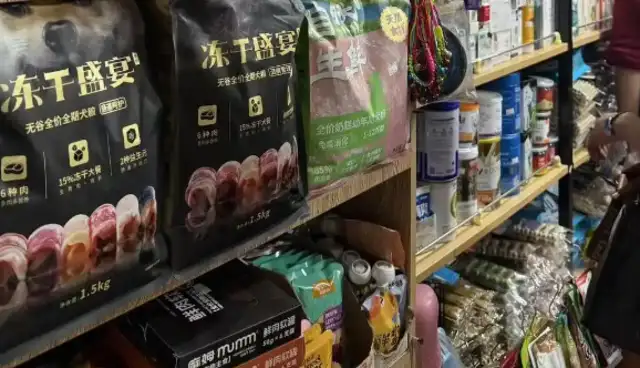
In terms of market share, food and snack tracks are growing rapidly. Zhang Yi told journalists that the size of the pet food market has remained high in recent years, reaching $22.7 billion in 2024, and is expected to exceed $26.7 billion this year. In addition to increasing the size of foreign-owned enterprises, the country's product brands are rapidly rising. Eli shares, Tungway Group, New Hope Group and other food-related giants, including the Pit food track.
As more and more “professional” players, such as food companies, are coming in, high-end and customized are one of the characteristics of the current pet economy. Zhang Yi's analysis: “Peter owners' demands on the quality of their pets' lives are constantly increasing, and the way they take care of their pets is moving away from thin to fine, driving the surge in demand for high-end foods and supplies; at the same time, services such as customized nutrition programmes and customized foods have emerged.”
Journalists have also noted that some well-known sports brands have gone up in battle against the pet market. First, Louis Vuitton, the fashion luxurious giant, set the theme of the 2025 Early Spring Men's Series as “Dog Lvers” by launching costumes and accessories suitable for everyday walks, park trips, and participation in dog-loving communities; then Adidas directly placed pet clothing products on the Sanafian flag shop, covering such commodities as short sleeves, collars, imitations, etc.; and recently, under the Nike flag, Jordan China announced that it had officially set foot in the pet track and launched a summer-limited series of “sweet children”.
From food to clothing, pet consumption is becoming an important part of the consumption of young consumers, and the ecological and commercial logic of humanization is constantly being reshaped. Several pet industry people noted that pets are the core object of the pet economy, but that their essence is to meet the emotional and lifestyle needs of modern people.
According to Zang Nan, the transformation of pet clothing into a carrier of master aesthetics not only demonstrates the emotional attachment of Z to pets as family members, but also as a social asset, while the price premium paid by consumers is usually paid for identity, and the purpose of introducing the pet series in the clothing brand is to attract consumer attention and increase the adhesion between brands and consumers.
Some pets are also expanding brand influence in a cross-border connection. The director of the pet food brand Pat told journalists that, as a pet food brand, he has been actively working with various consumer brands to spread the concept of “scientific pet care and care for homeless animals”. In addition to the recent launch of the joint public goods perimeter with the Tims Sky Coffee, different levels of collaboration have been established with brands such as the Tea and Tea-Gee, Jasmine, Autobots, and Smart Homes, De Schman.
Aiming at consumption trends where the pet population is willing to pay for emotional values, the catering industry has also begun to organize the pet market across borders. Last year, a new pet baker brand, Holiland Pet, focused on pet cakes and pet service experiences. In January of this year, three squirrels announced the establishment of a fully-owned subsidiary, Anhui, three squirrel pet foods, Inc., to hatch the pet food brand “Gold Daddy”. In February this year, the founder of a box of horse fresheners, Hou Yi, also launched the new retail brand of pet food, “Pet fresh”, and opened his first shop in Shanghai.
Our pet economic development has been strong, driven by a combination of rising emotional demand and consumption. In recent days, a number of publicly listed companies in the pet industry have continued to disclose performance in the first quarter of 2025. There has been a significant increase in the performance of enterprises such as medium-sized and precious pets. Of this amount, CPE earned RMB 1.101 billion in quarterly operating income, an increase of 25.41 per cent over the same period and net profit of 62.13 per cent over the same period. By the end of the first quarter of 2025, the total assets of precious pets amounted to $5,195 million, an increase of 3.7 per cent over the end of the previous year; the net assets of mothers amounted to $4,343 million, an increase of 4.8 per cent.
Strong competition: from talent to channels
As the pet market expands, more businesses enter the pet market. According to the specialized edition of Skywatch, to date there are more than 4.90 million active and viable pet-related businesses in the country. Of these, more than 712,000 new enterprises have been registered since 2025, and in the light of the trend in the number of companies registered, the number of companies registered for pets has increased over the past five years and peaked in 2024.
In the view of Suh Yoon, a strategic positioning expert and founder of Kyushu Positioning Consulting, the downstream industrial chain in the pet market is huge and the pet economy is gradually shifting from simple product consumption to more sophisticated service consumption. He further advised businesses and businesses to “find a single point for a breakthrough, not a big one”. In his view, if a market is large enough, it needs to be further positioned, along the lines of professional development, focusing on “one class, one identity, one group of people” to do something.
It is worth mentioning that the first national undergraduate “Pups” specialisation at the Agricultural University of China in recent days has attracted widespread attention. It is known that it is oriented towards animal sciences (partner animals) and falls into the broad category of “animal sciences” and that the core curricula of the current “pets” specialties include pet domestication and care, pet beauty and health, pet feed processing, horsecraft and horse culture.
It is understood that, in contrast to the animal sciences that have been developed previously, the teaching of “pets” is mainly focused on animals such as cats, dogs, horses, etc., rather than previous animals such as pigs, chickens, cattle, sheep, etc.
Zhang Yi believes that school cooperation is a central path to future talent building: On the one hand, interdisciplinary curriculum design, such as the integration of pet care, creative design and digital management into the talent development system, on the other hand, a strong effort should be made to promote industry mentorship, inviting first-line business experts to higher education to work with theory and practice, and on the other hand, the “order culture” model could be explored, i.e. to tailor the curriculum structure and practical content to the needs of business users.
On the other hand, while the domestic pet market is ushering in a new phase of upgrading the development dividend, new trends have also brought about a higher threshold of innovation, upgrading and iterative issues for enterprises. In the face of intense competition, the strategic configuration of enterprises also needs to be clearer.
In response, Zhang Yi suggested that “at the end of the product, technological development and functional innovation must be strengthened. For example, the development of specific functional products, differentiated subdivisions, and food and health products that are more in line with pet health trends; at the end of the channel, in addition to traditional electricians and underline pet shops, there is a need to strengthen cooperation with high-end pet hospitals and pet shops and to create an integrated marketing network. At the service level, the integration of products and services is important, such as the introduction of composite products such as `food + health counselling' `substitutes + usage guidance' to enhance customer stickiness and brand premium space.”
In terms of current status, local brands are working on high-value-added staple foods, adding brand-building and marketing, and actively capturing online traffic dividends. Journalists have been told that the current live broadcasters are an important channel. Data on pet consumption by Skycat “6/18” this year show that the 100-minute sale of pets is more than the full-day sale on the first day of last year, with a 180 per cent increase in the number of live exchanges. Official data from Kyoto pets show that the turnover has doubled by over 500 brands.
Zhang Yi pointed out that the entire channel is now becoming a trend, and services such as single line-down delivery, underground experience, etc. are developing a pattern of “two-way enabling”.
The rise of the pet economy is re-energizing traditional bottom-line retailing, and policies have been introduced to support innovations in pet consumption landscapes and patterns, while promoting consumption revitalization while providing more consumption options for pets. It is known that Shenzhen has put in place a number of measures to support the development of the pet economy, and that Chengdu is organizing a “bright carnival” around such features as urban parks and pet-friendliness, leading to the development of pet food, supplies, medical care and beauty in the park.
Many vendors have responded by setting up pet interfaces, trial zones, etc. at door shops, which not only increase the rate of conversion of purchases, but also bring greater brand memory and emotional links; innovation and organization of some pet thematic events, such as pet fairs, bring new consumption dynamism to parks.