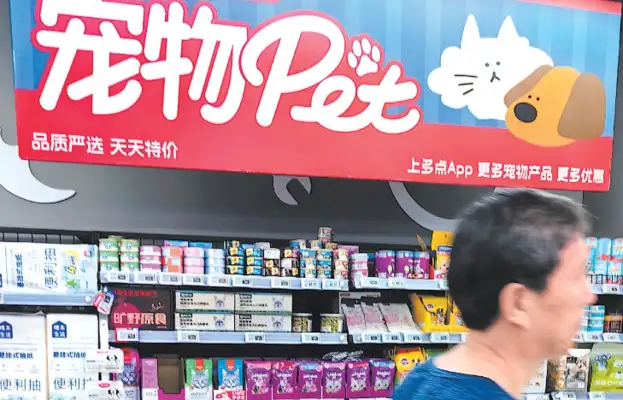
In recent years, the pet economy has witnessed an explosion of growth as the standard of living of our population has risen, emotional needs have become more pronounced and consumption attitudes have changed.
From daily pet foods, supplies to specialized medical care, beauty services, to emerging areas such as pet insurance, funerals, the market for pet consumption has been expanding and has developed in a qualitative, individualized and diversified manner.
The data show that the scale of pet consumption continues to rise and that the pet economy has become a new growth point in boosting domestic demand and driving up consumption, with strong dynamism and broad prospects.
In recent days, KPMG China has published its first in-depth survey on the pet industry, China's pet industry market report 2025, its “economic” consumption upgrading and market insight. The report shows that in the pet market, the size of the Chinese pet-related business market jumped from $97.8 billion in 2015 to $59.28 billion in 2023 at a compound annual growth rate of 25.4 per cent, with a projected growth potential of $81.1 billion in 2025.
According to China's White Paper on the Petty Industry 2025 (Consumer Report), which read the products from the big data platform of the pet industry, the size of the Chinese urban (dog and cat) consumer market grew by 7.5 per cent in 2024, to $30.2 billion. The report also notes the willingness of pet owners to invest more in food, medicine, supplies, services, etc. for pets.
According to the latest report on monitoring the performance of the Chinese pet industry and the consumer market for the period 2024-2025, published by APT, the size of the country ' s pet economy has remained positive and is expected to reach $1.15 billion by 2028.
On the back of the good-looking data is a consumer who is willing to smash real money and silver for pets and for pets. Ms. Lee, the pet owner of Beijing, shared the message: “My family has two cats, who used to buy cat dust, which is cheaper, and now focuses more on their deodorant effects, dust, etc. This year, when I was "618", I hoarded them several bags of high-quality cat sand and bought new cathouses and smart toys." There are no few pet owners like Ms. Lee, and it is their transformation in consumer behaviour that drives the growing size of the pet market.
At present, our pet economy has developed an ecological system covering the entire industrial chain of reproduction, medical care, food and services.
It is noteworthy that pet consumption is showing a trend towards “humanization”. “Pups are not only `family members' but are an important link in modern human pursuit of healthy lives.” The Chief of the pet nutrition and food team at the Feed Institute of the Chinese Academy of Agricultural Sciences and Secretary-General Wang Jin of the Technical Committee for the Standardization of Petty Feeds of the National Technical Committee for the Standardization of the Feed Industry stated that “from pet insurance, thematic restaurants to insect protein foods, new services and products are emerging. In addition, adolescent mental health and the need to be accompanied by silver hairs contribute to the social value of the pet economy. The emotional value of pets for human beings is deeply resonated behind this irrational consumption.”
With regard to the emerging new business in the pet economy, Autumn, a professor at the Faculty of Economics of the University of Jilin, believes that the improvement of living standards, the transformation of the role of pets has led to the diversification and fine-tuning of pet-related consumption, not only as a new highlight in the area of consumption, but also to the opening up of wider employment and entrepreneurial space.
With the gradual shift of pets from traditional “animal partners” to important members of families, there has also been a significant shift in the consumption perception of pet owners, with a clear trend towards consumption escalation. Instead of serving only the basic subsistence of the pet, the pet owner is paying greater attention to the quality of life and individualized needs of the pet.
In the area of pet foods, high-quality, natural, non-additional and functional products are favoured. From “saturation” to “good eating”, pet owners place higher demands on the quality, nutrition and safety of their pet foods, focusing not only on the functionality of the product but also on the philosophy and emotional values behind the brand. Chinanet data show that the penetration rate of pet foods, such as high-end natural and grain-free foods, has risen rapidly, with high-end markets reaching 40 per cent. Fresh meat raw materials, low-temperature process products are preferred, and sales of subdivisions, such as cold food for cats and dry food for dogs, have increased significantly, confirming the market's preference for “high-quality foods plus advanced processes”.
A number of shop owners of pets have indicated to journalists that there is a sense that customer consumption is increasing. For example, young pet owners carefully compare the composition tables with nutrition indicators such as proteins and amino acids; for older pets, they tend to look at functional components such as joint maintenance, gastrointestinal adjustment, etc.; and even for snacks, see if an entrapment is added. The pet owners want to extend their relationship with love through scientific feeding.
According to the Chief of the Daily Supplies Unit of the Kyoto Supermarket, the current consumption of pet electricians is characterized by changes in the number of clients, population groups, promotions, frequency of consumption, preferences, etc. Consumer preferences have also changed, with more than 53 per cent of users exchanging food for six months, out of concern for incomplete food nutrition and a lack of appetite for pets. On the price side, high-price brands are rapidly entering the industry and low-price platform brands are growing rapidly on multiple platforms.
As pets become indispensable members of the family, so does the caring for pets. They no longer simply satisfy the basic needs of the pets, but focus more on their health and quality of life. This shift has contributed to the rapid development of the pet food industry and to the continuous upgrading of the quality and nutritional value of products by enterprises to meet changing consumer needs.
Mr. Shanghai's pet claims that he customizes his own pet dog's birthday cake, which is based on natural food and meets the dietary needs of the dog. He said, "Doggies are like my family, and their birthdays must be celebrated. Such custom cakes are special and healthy."
According to Zhang Lin, Deputy Secretary-General of the China Society for the Leisure and Leisure Industries and Secretary-General of the China Society for the Leisure and Leisure Industry, the product is not only compatible with the consumption habits and aesthetic needs of the pet owner, but also with the dietary and behavioural habits of the pet and the special needs of different varieties. “If brands were to be positioned in these areas, it would be easier to gain consumer recognition and trust.” Zhang Lin said.
Driven by a combination of rising emotional demand and consumption, the country ' s pets have a strong economic development and the outlook for the industry is widely appreciated.
“The outbreak of the pet economy is driven not only by market demand, but also by a combination of policy and technological innovation.” According to Lin Kaihua, a partner in the retail and consumer trade in China, KPMG, the State has accelerated the development of domestic pet food brands through policy guidance and technical support to encourage enterprises to increase their research and development inputs and improve product quality.
With the strong support and promotion of many governments throughout the country, the layout of pet estates is increasing and the national pet industry is entering the boom of industrial clusters. The pet estate, driven by both policy and capital, is in the process of blowing up its entire chain of pet industries in various parts of the country, placing the pet economy at the forefront of local economic development. According to incomplete statistics, 22 of the country ' s priority pet estates (or clusters) have been disclosed, of which Pingyang, Wenzhou, and Yantai Mountains have developed into representative national pet estate centres. In addition to the mountainous, Hebei and Long Triangle regions, where the pet industry is in a good atmosphere, the pet industry is emerging in other regions.
In addition, Lin Kaihua points out that the pet industry in China is at a high stage of development and that the sub-markets of pet food, pet medicine, pet supplies, etc. show great potential for growth, with unlimited potential in emerging services such as pet medicine, pet insurance, and pet burial. With the accumulation of supply chain advantages within industrial clusters, the transformation of the Chinese pet industry from a simple to a technology-led and scale-up industry will be accelerated.
In the case of pet insurance, for example, a number of risks have long been planned. In recent years, with the development of the pet medical industry, more and more ventures have begun to deploy the pet medical insurance, which is entering a period of rapid development. According to data from the Panthers Institute, the size of the Chinese pet insurance market increased from RMB 210 million in 2017 to RMB 3.37 billion in 2021, with a compound annual growth rate of 100.4 per cent. Small and medium-sized companies with a focus on emerging risk species, such as Online, the National Thai Product Insurance, etc., have identified pet risk as one of their major new growth points. According to the annual report, the total premium on pet insurance increased by 129.5 per cent in 2024.
The high level of innovation in pet consumption is a notable feature of the current consumer market, and the pet economy is developing rapidly. According to Liu Xuan Ting, Audit Partner, Retail and Consumers Industry, South China District of KPMG, and Chairman of the Organizing Committee for Market Reporting, 2025 China ' s pets industry, while online channels have become the first channel for the sale of pet foods, offline channels (including pet shops, pet hospitals, supermarkets, canine and cathouses, etc.) still occupy an important position, as they provide better shopping experience and additional services. In the future, branders need to focus simultaneously on the synergistic development of online and offline channels and constantly optimize products and services to better adapt to market changes and consumer needs.