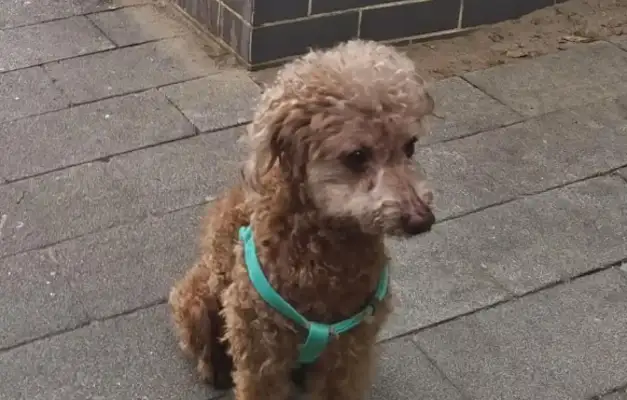
On 21 June 2025, Mr. Xian Chong walked out of the hospital with a nearly $1,000 bill in his hand and his eyebrows were locked with the dog Yuanbao, who had just finished his examination. This is his seventh medical visit in a year and a half, and the high cost of medical treatment has put him under stress. In the run-up to a medical examination with Yuanbao, the different rates for the different pet hospitals vary widely, and the variety of doors makes Mr. Gao talk. Actually, Mr. Gao's experience is not an example.
The pet economy has flourished, extending from basic foods, supplies and medical care to broader areas of life services, building new service ecology.
The environment of pets is gradually improving. On 20 June, the Général Group officially issued a public announcement that, as of 20 June 2025, it would expand the pilot scope of the high-iron pet shipping service to cover 8 high-iron stations and 38 motorized trains, including Kyouta, Kyeonggu, Kyingha and Yongkun.
Among these, the Union joined stations such as Beijing West, Zhengzhou East, Wuhan, Chang Shanan, Guangzhou South, Shenzhen North, Shen Yang North, Dalian North, Harbin West, Chengdu East and Qingshima to pilot the high iron pet shipping service. At the same time, pet shipping services are available on trains G335, G1377, G491/492, G935, G1591, G208. Since then, the high iron pet shipping service has officially covered the North West Station. In February 2025, the new retail brand of pet food, “Pet fresh”, opened its first shop in Shanghai. In May, the brand announced the completion of $25 million in Angel Wheel financing, which has led to a new high in recent years for the pet industry. Three squirrels Inc. invested in the creation of three squirrel pet foods, a wholly owned subsidiary, to hatch the new brand of Golden Father.
At the same time, in addition to the Faculty of Animal Medicine of the Northwestern University of Agriculture and Forestry, the Faculty of Profession in Xi'an Haiyan and the departments of Yang Ling, Poo-Chicken, Xianyang, Han-Chang and Qunang have also established separate specializations in animal medicine. The growing market for pet consumption has allowed people to use real silver and silver to drive pet consumption towards the new $100 billion track. However, the high cost of pet medical care has led many young people to speak out for “trigger pressure”. As a result, pet insurance has been created, taking a place in the consumption lists of young pets.
Data from the survey show that, as of 18 June, there were 168,000 existing businesses related to the medical care of domestic pets. In terms of the number of years of establishment, the number of years of establishment of existing enterprises is higher than 5-10 years, or 39.13 per cent, followed by 3-5 years, or 20.82 per cent. From the point of view of registration, there has been a general upward trend in the registration of pet-related businesses over the last decade, with 869 registered so far this year, of which 772 were registered in the previous May, an increase of 10.92 per cent over the same period.
According to China's White Paper on the pet industry (Consumer Report) 2025, in 2024, the number of Chinese urban pets (cats) exceeded 120 million, an increase of 2.1 per cent over the same period; the size of the consumer market reached $30.2 billion, an increase of 7.5 per cent over the same period. According to the 2024-2025 Monitoring Report on the Performance and Consumer Markets of the Chinese Petty Industry, the size of the Chinese pet economy market is expected to reach RMB 1.15 trillion by 2028.
Behind the rapid expansion of the industry, however, is the widespread anxiety of pet owners about “cheaps”: 300 dollars per hour for oxygen consumption, 200 dollars per hour for high-pressure oxygen module, 320 dollars for biochemical testing, and some of them even opt for “dissociation” for care.
However, the high cost of pet medical care has led many young people to speak out for “trigger pressure”. As a result, pet insurance has been created, taking a place in the consumption lists of young pets.
On the social media platform, Little Red, a short article entitled "If your pet is sick, but the cost of treatment is higher than its market value, will you still pay for it?" generated extensive discussion. Of these, 95 per cent of the participants chose “can save”. But many people have posted their own medical bills on their pets in the comment area, saying that their wallets have been “emptied”. In real consumption, problems such as “misdiagnosis” and “overdiagnosis” are frequent. For the same examination, the difference between the different hospitals can be 200 per cent; in the settlement of insurance claims, some of them are denied compensation on the basis of “historic history” and disputes persist.
“I feel like I'm a chicken...” talking about pet insurance, a woman with a name she doesn't want told the press that pet risk seems to be a test of “ice and fire”: pet risk as a whole includes the poor business of Paul, with a particularly high level of compensation; and users feel that product restrictions are too high to pay.
At the same time, irregularities and fraud in the medical care of some pets have increased the cost of compensation and affected the interests of normal insured users. In addition, the high cost of medical care for pets and the inconsistent rates of fees have led to frequent user disputes. In order to address these problems, it is recommended to strengthen industry regulation, harmonize tariffs and promote the normative development of the pet health industry.
During their visit, journalists learned that domestic pet insurance had started in 2004 and that the Watanabe Insurance had introduced a comprehensive family insurance scheme, Small Houses, to include pet liability in the form of additional insurance, while the Pacific Insurance had introduced a separate pet liability risk (primary risk) in 2005. Since then, risks such as human security, safety and the land have been brought into the Department to introduce pet health insurance. After 2018, companies such as Ann, Powder and others are also developing their pet insurance at the end of the channel with online operations.
At present, the types and coverage of the Shaanxi pet insurance cover, inter alia, medical insurance: reimbursement of medical expenses in the event of a pet ' s illness or injury; liability insurance: protection of physical injury or property damage caused by a pet to a third party; accident insurance: accidental treatment such as covering fractures, burns, poisoning; comprehensive insurance: medical, liability and death insurance.
At the same time, 58 per cent of pets are regarded as “family” and 29 per cent are defined as “psychiatric partners” and human consumption generates high-cost medical needs.
“At present, the entire industry system of pet hospitals is dominated by the private sector; and most pet hospitals have their own system of diagnosis and pricing, which calls for the regulation of standards for the prevention and treatment of pets”. Professor of the Xian University of Finance and Economics suggested promoting the medical classification system for pets within the industry and setting standards for feed production. There are conditions to lower the user threshold through the development of an AI-aided diagnostic system for technology-inclusive development, with a moderate reduction in the cost of pet consultations. At the same time, the concept of pet health management has been promoted, moving from “health treatment” to preventive consumption, such as “oxidation resistance, balance of intestinal strains” and reducing the number of consultations, so as to “secure” and make the pet insurance work.
Despite the challenges, the pet economy was well received. According to the China Petty Industry Performance and Consumer Market Monitoring Report, 2024-2025, the size of the Chinese pet industry market is expected to reach RMB 1.15 trillion by 2028, with medical care, insurance, smart supplies (such as automatic feeders, smart cat basins) becoming new growth points.
As one pet says, "They are not just pets, they are family." Driven by emotional consumption, markets need to find a balance between expansion and accountability. As the policy dividend resonates with the demand of the Z generation for “precision” support, this track may be more resilient.