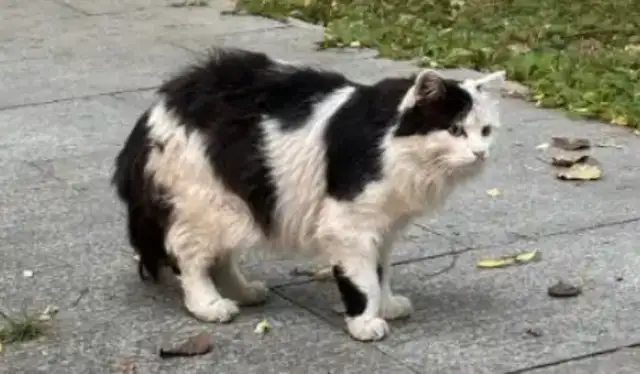
"The cyber-killing is a fake, but is it really appropriate for a child to drag a cat?" The discussion among netizens has not subsided with the clarification of the "misuseful killing" following the release of a report on the "student mistreatment of animals". From the fact that the cat had to be dragged to the video, to the rumours that the maliciously plagued brided to kill, to the criticism of education and the placement of stray cats in school, this wave has exposed the indifference of some students to animal life, as well as the malicious magnification of cyber rumours.
The core of the incident was clearly visible in the briefing: on the afternoon of 16 August, a student at the school was dragged and squeezed in response to frequent noises from a stray cat in front of his home, and videod the process to social platforms. This is an individual act of “improper treatment” of animals, which is being “processed” by an unintentioned person in the web -- creating false information about “student abuse of cats” through adhesive marriage. It was not until August 18 that the school, together with the community police and the property industry, verified that stray cats were normal and placed in rescue facilities, that the rumours of “abuses” were completely broken, and that students and parents also chose to call the police because of malicious rumours.
The difference between “abuse killing” and “improper treatment” is different in nature, although it is only two words. The former is an extreme act of depravity, while the latter is an act of lack of respect for animals, but both point to the same problem: the lack of awareness among some young people of “life fear”. It refers to “serious criticism of students”, a process that is timely and necessary - dragging and squeezing stray cats, even if they do not cause fatal harm, is contrary to basic common sense, and the process is video-taping, with greater disregard for animal suffering. As Internet users have commented: "How can we learn to respect life if we don't kill cats like toys?
Even more alarming is the web-based rumour of "oil and vinegar." In an age of information fragmentation, “abuse of animals” is a topic that is highly susceptible to public outrage, and the charlatan exploits the public's concern for animal protection to create “horrifying” illusions through marriage, both misleading public opinion and putting unnecessary pressure on students and schools involved. Such “magazations for the bottomless flow” not only run counter to the truth, but also consumes the cost of trust in society. It is good to verify and clarify in schools in a timely manner, avoiding further spread of rumours, and to inform the handling of other similar events: in the face of controversy, only rapid reversal of facts and open and transparent reporting can curb the spread of rumours.
In its bulletin, the school referred to “enhanced moral education for students, one by one”, which is the key to solving the problem. In recent years, there have been occasional incidents of inappropriate treatment of animals by adolescents, often behind family and school “life education”. It is more important than simply criticizing punishment to make it clear to students that stray cats, though not adopted, are living lives and that respect for animals is essentially an expression of respect for life and development of common sense. Students can feel the meaning of life at close range by offering lectures on animal protection, organizing voluntary activities at rescue stations, and eliminating “abuse of animals” or “neglect of animal suffering” at the root.
Today, stray cats have been properly housed and rumours of “abuse” have been clarified, but this wave has left much to be desired. For students involved, this is a profound lesson of behaviour; for schools, it is an opportunity to improve moral education; and for the public, it is a reminder to discern cyber rumours and to view disputes rationally. After all, we are not only against the extremes of “abuse of animals”, but also against the lack of awe of life; we are pursuing not only “broadcasts to clarify”, but also everyone's adherence to the bottom line of “respect for life”.