Two of the beetles have been identified as bicoloured and skin coatings; four of the deep-seal Laos are the first species intercepted at the Beijing crossing, which are not naturally distributed in the country and are alien species.
In recent years, snakes, lizards and beetles, represented by their unique appearance and novel breeding experience, have been rapidly gaining ground among younger groups. The 2025 White Paper on the Chinese pet industry (Consumer Report) shows that more than 17 million people are raising pets, yet many of them are alien species with potential safety risks.
Thirty-five lashes were stopped at the palace.
In May of this year, a passenger arriving in Hangzhou from Seoul, South Korea, entered the country with 35 lashes and was stopped and checked by the agents on the ground.
The species has no natural distribution in the country and belongs to alien species.
A group of pet living snails were found.
In recent days, customs officers at the Seagullan airport, which belongs to customs, have seized a group of “other than pet” living snails through the inspection channels.
The group of live snails has been identified as having milk-shaped ear snails, pizza snails and Andalusian snails.
Among them, breast-shaped ear snails and pizza snails are quarantine harmful organisms of our imported plant, which are important agricultural pests and may spread parasitic diseases among humans and animals.
The “other pet” of alien species
What are the risks?
Some of the pets seem to be fun, but they're not easy to raise. A number of players often run off on their own by abandoning or “relationship” because of a lack of predictive rearing conditions and knowledge of animal habits.
Once “other pet” has escaped or been abandoned, the absence of biological and non-biological constraints, such as indigenous natural enemies, in the new environment, and the high adaptive and breeding capacity of some organisms can rapidly develop into populations with a high potential to undermine ecosystem security and the stability of biodiversity and ecosystems.
`Observation' of common alien species
Brazilian turtle
Born in south-central America.
Characteristics: No natural enemies, too many.
Hazard: is one of the routes of transmission of Salmonella, affecting human health and the survival of aquatic animals.
African snails.
Born in Eastern Africa.
Characteristics: Highly fertile, with a wide diet and even gnawing cement.
Hazards: It can harm more than 500 crops and can spread tuberculosis and acid meningitis.
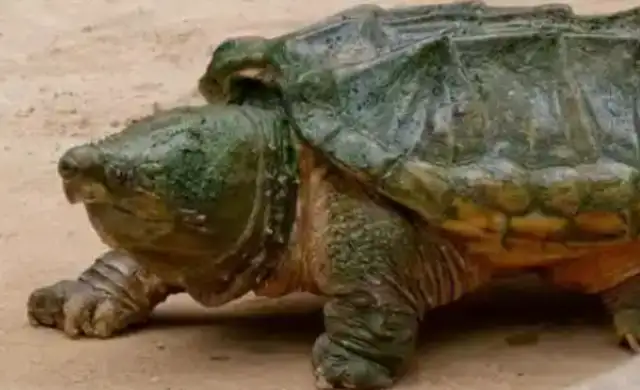
Crocodile.
Countries of North or Central American origin.
Characteristics: One of the world ' s 10 most ferocious freshwater fish, lacking natural enemies, capable of survival and highly toxic.
Hazards: Severe interference with the ecosystems of the invasive areas affecting the reproduction of other fish stocks.
Crocodile.
Born in Central and North America.
Characteristics: Rapidly growing, lively and aggressive.
Hazards: The absence of natural enemies poses a serious threat to local aquatic animals and a significant ecological hazard if released in the wild.
Is “exogenous species” equivalent to “invasive alien species”?
The core difference between alien and invasive species is whether or not it causes substantial harm to ecosystems.
My country ' s Approach to the Management of Invasive Alien Species provides that:
Alien species: are species that are not naturally distributed within the territory of the People ' s Republic of China and that have been introduced by natural or human means, including all parts of the species that are likely to survive and reproduce. No unit or individual may introduce, release or discard alien species without authorization.
Invasive alien species: alien species that are imported and present a threat or hazard to ecosystems, habitats, species, the ecological environment of our country and the sustainable development of agro-forestry, fisheries and biodiversity. The Ministry of Agriculture and Rural Development, in conjunction with the relevant departments, has developed a list of invasive alien species, which is dynamically adjusted and classified.
According to our List of Priority Management of Invasive Alien Species, alien invasive species requiring priority management include:
Eight groups of plants, insects, plant pathogen microorganisms, plant pathogen nematodes, molluscs, fish, amphibians, reptiles, etc.