Designation: PET5921
English name: Geochelone yniphora
Character: tenacity
Origin: They can only be found in a small part of Madagascar.
Vulnerability: gastroenteritis, calcium deficiency
Life: 80-100 years
Value: Usually over $15,000, but very rarely. Profile of the Angoloka land turtle species
Angoloca, also known as a ploughhead, is one of the 10 most endangered animals in the world. At present, there are less than 1,000 surviving individuals who can be found only in a small area of Madagascar. Angoloca is a suitable living environment for weeds and bushes on the edge of the bamboo forest, which are native to dry forests in north-eastern Madagascar. Angoloka Land Turtle Form Characteristics
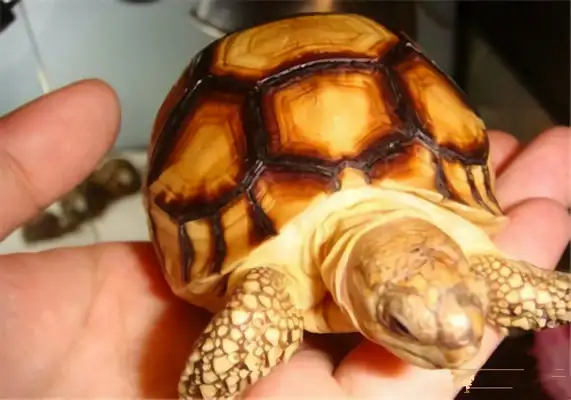
The surface of the Angoloca turtle is very different, with only one ping-pong ball in its infancy, but soon it will grow into one of the largest turtles on Earth.
Angoloca walrus turtles with a larger male body size than the female and 17 inches (43 cm) length of back armour. The average length of adult male Angoloka land turtles was 414.8 mm (16.33) and the average body weight was 10.3 kg (23 lbs). The average length of females was 370.1 mm (14.57) and the average weight was 8.8 kg (19 lbs).
Angoloca rises high in the shape of a ball with light brown colour, with visible annual wheels on each deck. The outer part of the vertebrae is a dark brown. The fully mature male Angoloca is likely to have a longer and heavier shape, while the abdominal dentures in mating seasons and fighting are strong and slow to adapt to the new environment compared to the female. Female personality mild, high back.
The islands of Madagascar on the eastern coast of Africa, the fourth largest island in the world and the first largest island in Africa, have also produced numerous species of unique species. The island ' s turtles are the four largest, successively classified as CITES-level care. Angonoka is a local name, and the British call it Ploughshare because of the expansion of their bras. There are less than 3,000 people in the original world, mostly small individuals. Artificial reproduction is also limited to a small number of care organizations, which can be considered the most valuable land turtle. Prices in the domestic and foreign markets are generally 1 cm, or $1,000 a cm. Angoloka knowledge of turtle care
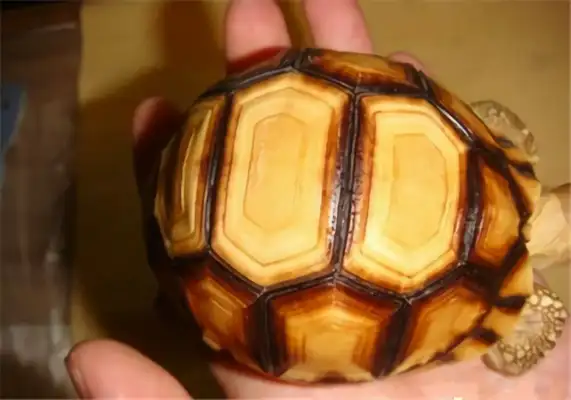
The Angoloca turtle is not only a rare ancient creature but also a symbol of culture, and there is now a growing awareness of the importance of protecting him, as well as of the efforts of many organizations to protect Angoloca turtles.
I. Malagasy culture
The Malagasy have a lot of lecturing, they call it fady. One of the fadys is that it's bad luck to eat Angloka. Although they will not be eaten, Angelo was taken from the wild by Malagasy. This is because another fady is talking about keeping the chicks together with Angelo can guarantee their health. Almost every Malagasy can give a detailed description of an Angelo, even though they have never seen it. Such turtles are part of folklore and Malagasy culture. People there are proud of their turtles because they live only in Madagascar. Angelo is helping Malagasy people living in one of the poorest countries in the world to solve their environmental problems.
II. PROTECTION PLAN
In 1993, the number of Angoloca was estimated at between 100 and 400. In order to save this particular land turtle, in 1986 Madagascar ' s soil and water forest and wildlife conservation department established the Angoloca Rescue Plan. The Angoloca rescue programme includes research, artificial breeding and the active participation of local groups. The programme has been very successful, with over 150 turtles born in breeding centres. The adult turtles used for breeding are seized by the government as illegal pets. Eventually, some of the breeding turtles will return to the wild.
People living on the Malagasy islands have seen changes in the surrounding environment. They have become aware that their forests are disappearing and that fish in the lakes are diminishing. Their survival depends directly on these natural resources and they therefore want to be able to protect their living environment. In order to reduce the loss of resources caused by the forest fires, Malagasys are now aware of the responsibility of everyone to help put out the fires, and those who do not do so will be punished. Angoloka's land turtle living environment
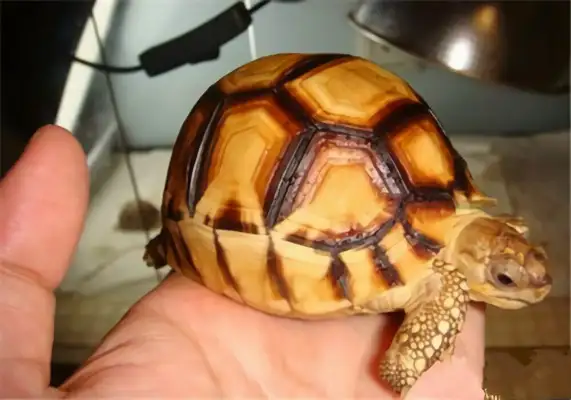
The turtle lovers are not strangers to Ang, and they're all attracted to their ball-shaped shape, their sharp-eared throat shield, their yellow backslids, and their few (perhaps scarcely expensive) so they're called the king of the turtles.
I. Environmental factors leading to imminent extinction
For Angelo, like many other endangered animals, habitat decline is the most important threat. Because of the fires, the forests on which they depend are gradually disappearing. Malagasy farmers use fire to promote pasture growth as cattle feed or to clean up land for rice and cassava.
These fires have created tropical savannahs consisting mainly of palm plants. Unfortunately, such savannahs have little shade and are too hot for Angelo. In addition, the predatoring of young turtles and eggs by boars in South Africa is a problem. Such pigs are imported from Africa, there are no natural enemies in Madagascar, and Malagasys are fasting pork, which has led to the proliferation of boars. In the end, the illegal pet trade seemed to ring the bell of the wild Angoloca.
II. Incubation environment
Angoloca turtles are capable of laying eggs at any time of the fourth quarter of the year, there are a group of Angoloca turtles that are farmed outside of Kansascity, where warm climates are kept outside, moved into the room when cold, usually seven years in a row between October and April of the following year, because the Angoloca turtles are likely to lay eggs in the fourth quarter of the year, so they must always be prepared in a place where they can successfully bear eggs, where at least one male Angoloca turtle can enter, and where competition between males can stimulate their reproduction.
Conservation
A bath: once a day in the summer and once a day in the winter, the defecation continues to form, and the humidity: 55% - 75% of the ventilated convection shows a state of beauty. When you are familiar with the environment, you have good interaction with people and you can chase your hands and feed them at any time. If you don't give it to him, it won't keep running at you, and it will just stay there and stare at you with your poor eyes until you give it to him. Ang's growth rate is slow, usually 1 to 2 centimetres per year, so please don't try to keep your body well. Angoloca Tortoise Feeding Point
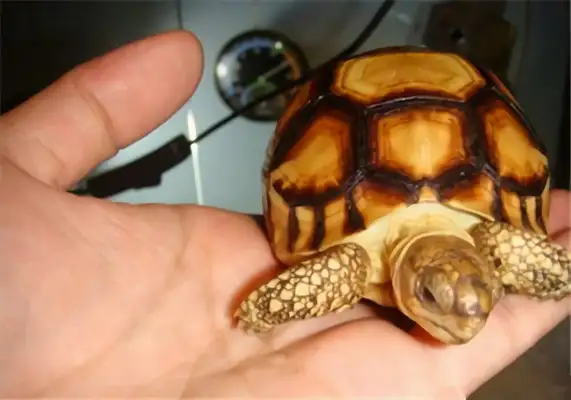
Also the Mashima elves, the Angoloca turtles do not have the power of the Aadas, nor do they have the radiant colours. Then why would anyone choose a species that is not so prominent and expensive to feed? Maybe that's his charm!
Food choices
A small amount (less water) of fruit (elementes, oranges, etc.) is largely green, and Angoloca turtles are less interested in feed, of course not less ink bone use, and then regularly add a few trace elements each month, as there is no resting environment and less time for direct sunlight in winter, so the normal calcium is used in conjunction with VITD3, with a slightly larger number and volume.
The following vegetables are available: oatmeal, mustard, bitter, oily, pickles, purple radish, cabbage, platinum leaves, potato leaves, sauna, chicken cabbage, cabbage, lettuce, etc. Supported food: carrots, apples, bananas, pumpkins, etc.
II. Frequency of feed feeding
Little turtles don't feed in the first week, they start in the second week, small, two days. Depending on the individual amount, it's different. Remember to eat a lot of inexplicable deaths every day at a cost of less, which is because too much can't be digested. Tortoises have a long digestive cycle, which usually takes a week to digest.