Walking into the streets of the night, listening to the rest of the song "Theater" and watching the face-to-face show, setting up tents, putting up a skylight, meeting with family or three or five friends, having a slow time; travelling with pets, staying in hotels, watching the world together; accompanying children, taking care of patients, with smart robots walking into our lives...
The dynamism of the economy not only gushes in a set of data, but also in the evaporating pyrotechnics of the night market, the swinging camping lights and the decompression of small objects. These are the scenes around you and me that combine people's temperature with market dynamism and outline the dynamics of new economic development. This issue, entitled " The New Economy Around China " , touches the pulse of the Chinese economy from a small mouth, and tells stories about the vast blue sea of China ' s large market.
In the past week, the twenty-seventh Asian pet exhibit was held in Shanghai in 2025. At the end of the tour, a number of young scavengers came out of the social media: "The battle has almost opened the pet shop," "The pet food machine, the accompanying machine dog, the new product, the obscenity of the new product," "The Asian pet show is over, too much has been bought, and it's not moving."
It is not an isolated case, behind which is the growing pet economy, a trillion-dollar new industry with 120 million pets.
When the role of pets is no longer merely “care homes”, when more and more people pay for pet consumption, the pet economy is quietly completing the transition from “margin” to “mainstream”.
The latest data confirm this trend: the White Paper on the Chinese pet industry (Consumer Report) 2025 shows that in 2024, the number of Chinese urban pets (dogs and cats) exceeded 120 million, an increase of 2.1 per cent over the same period; the size of the consumer market was $30.2 billion, an increase of 7.5 per cent over the same period. According to the China Petty Industry Performance and Consumer Market Monitoring Report 2024-2025, the size of the Chinese pet economy market is expected to reach RMB 1.15 trillion by 2028.
Some call the pet economy “the economy”. A little "it," why did it break into a trillion-dollar market?
In industry analysis, pet economic booms, associated with the depth of urbanization and digitization, are the result of a combination of consumption escalation, changes in family structure, increased emotional demand and technological advances.
"Pups are both a member of our family and emotional comfort in life." In an interview with a journalist, White Leader Yang Linyi, who works in Shanghai, lamented that “I now have a Shenari dog, which costs at least hundreds of dollars a month for bare dog food and toys, not to mention vaccines, deworms, beauty and medical expenses”.
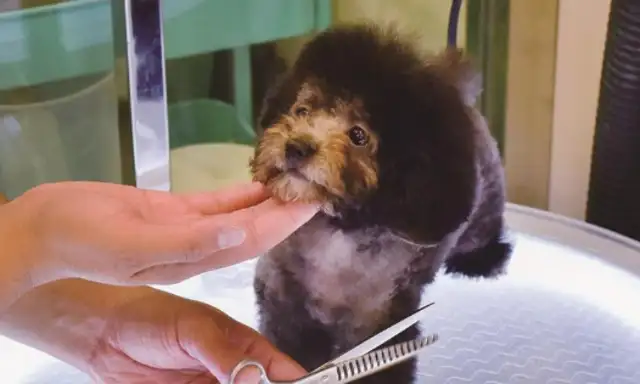
The large pet economy extends from basic foods, supplies and medical care to a wider range of services, building a service ecology that covers the entire life cycle.
“These two years, pet shops, large and small, have emerged as springs of rain, from pet foods, clothing, toys, to pets, baths, foster care, and so on.” Beijing consumer Ju Man Yoo told reporters.
"There are more pet-friendly restaurants, hotels, businesses, and easier shopping with pets, which also helps to boost consumption." Chengdu consumer Zhang Eileen said.
The pets are moving in an environment that is gradually improving - In April of this year, the railway sector piloted a high-level iron pet shipping service, “Segregated transport, diversion, exclusive care” in parts of the Kyoto high iron sector, which is gradually expanding. In addition, the country ' s first pet terminal at White Cloud Airport in Guangzhou was officially operational in May, providing a full chain of services such as quarantine bookings, shipping, kiosks and foster hotels.
“Petage shipping services address the travel difficulties of pet families and represent an important step forward in the field of transport towards a `people-friendly society', with the prospect of future integration with pet-friendly hotels and landscapes to create a complete consumer ecology.” Wang Chang Lin, Vice-President of the Chinese Veterinary Association of China, stated.
It is also to be seen that the pet economy has revealed a number of structural problems in rapid growth: The influx of small and medium-sized enterprises has led to high competition for the homogenization of products and services, especially in the area of pet foods and supplies, and many enterprises have a strong marketing preference for R & D and lack core competitiveness to support high-quality industrial development. At the same time, the lack of industry standards has resulted in uneven product quality and higher levels of service, affecting the creation of consumer confidence.
As the pet economy grows, many branding-related areas compete intensely in the pet foods, clothing, and so forth, the industry will also usher in a new “shuffle”. Standards for the various sectors of pets, including food, cleaning, medical treatment, insurance, etc., will also be improved. Science and technology empowerment will also help to put the pet economy on a more high-quality development trajectory and provide further growth for the real economy.